
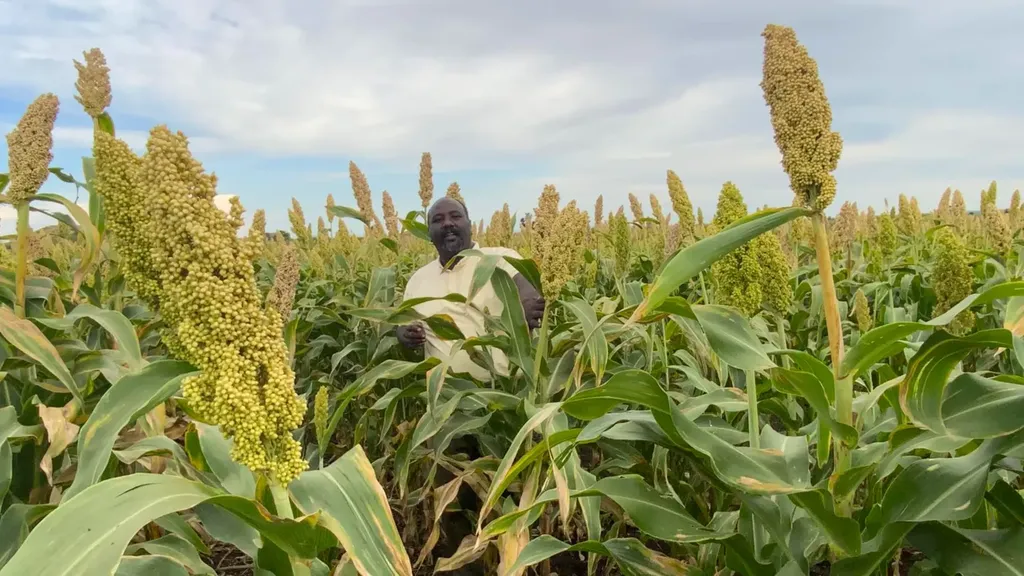
In the heart of Sudan, a treasure trove of genetic diversity is being unlocked, offering promising pathways to climate-resilient sorghum varieties. A recent study published in *Frontiers in Plant Science* has shed light on the untapped potential of Sudanese Feterita landraces, particularly their stay-green (Stg) traits, which could revolutionize drought-tolerant sorghum breeding.
Sorghum, a staple crop in drought-prone regions, is crucial for food and nutritional security. However, the genetic potential of Sudanese Feterita landraces has remained largely unexplored until now. Researchers, led by Mohammed Elsafy from the Department of Plant Breeding at the Swedish University of Agricultural Sciences (SLU), evaluated 133 Feterita genotypes using an integrated approach that combined field phenotyping with KASP genotyping. The study targeted the Stg3A and Stg3B quantitative trait loci (QTLs), which are known to influence drought tolerance.
The results revealed substantial phenotypic variation among the genotypes, with particularly high coefficients of variation for flowering stalks per plant, senescence, and grain number per panicle. “This diversity is a goldmine for breeders,” Elsafy remarked. “It provides a broad genetic base to develop sorghum varieties that can withstand the challenges posed by climate change.”
Genetic diversity analysis showed moderate marker informativeness, indicating a rich pool of genetic resources within the Feterita landraces. The analysis of molecular variance (AMOVA) revealed weak population differentiation, suggesting substantial gene flow and genetic exchange among the populations. This finding is significant for breeders, as it implies a high level of adaptability and resilience within the Feterita germplasm.
The study also identified several significant marker-trait associations, including snpSB0054 (SGR1) with plant height and flowering time, snpSB0072 with panicle length, and snpSB0101 (SGR3) with grain number and seed yield. These associations provide valuable insights into the genetic control of drought-related traits and open new avenues for marker-assisted breeding.
The commercial implications of this research are substantial. As climate change continues to impact agricultural productivity, the demand for drought-tolerant crops is on the rise. The identification of stay-green alleles in Sudanese Feterita landraces offers a promising solution for breeders and farmers alike. By incorporating these alleles into commercial varieties, breeders can develop sorghum cultivars that maintain their green foliage and photosynthetic capacity under drought conditions, ultimately leading to higher yields and improved food security.
Moreover, the study’s findings highlight the importance of conserving and characterizing traditional landraces. These landraces are not only a source of genetic diversity but also a reservoir of valuable traits that can be harnessed to address current and future agricultural challenges.
As the global agricultural sector grapples with the impacts of climate change, the insights gained from this study could shape the future of sorghum breeding. By leveraging the genetic potential of Sudanese Feterita landraces, breeders can develop climate-resilient varieties that meet the needs of farmers in drought-prone regions. This research not only advances our understanding of sorghum genetics but also paves the way for innovative breeding strategies that can enhance agricultural productivity and food security in the face of a changing climate.