
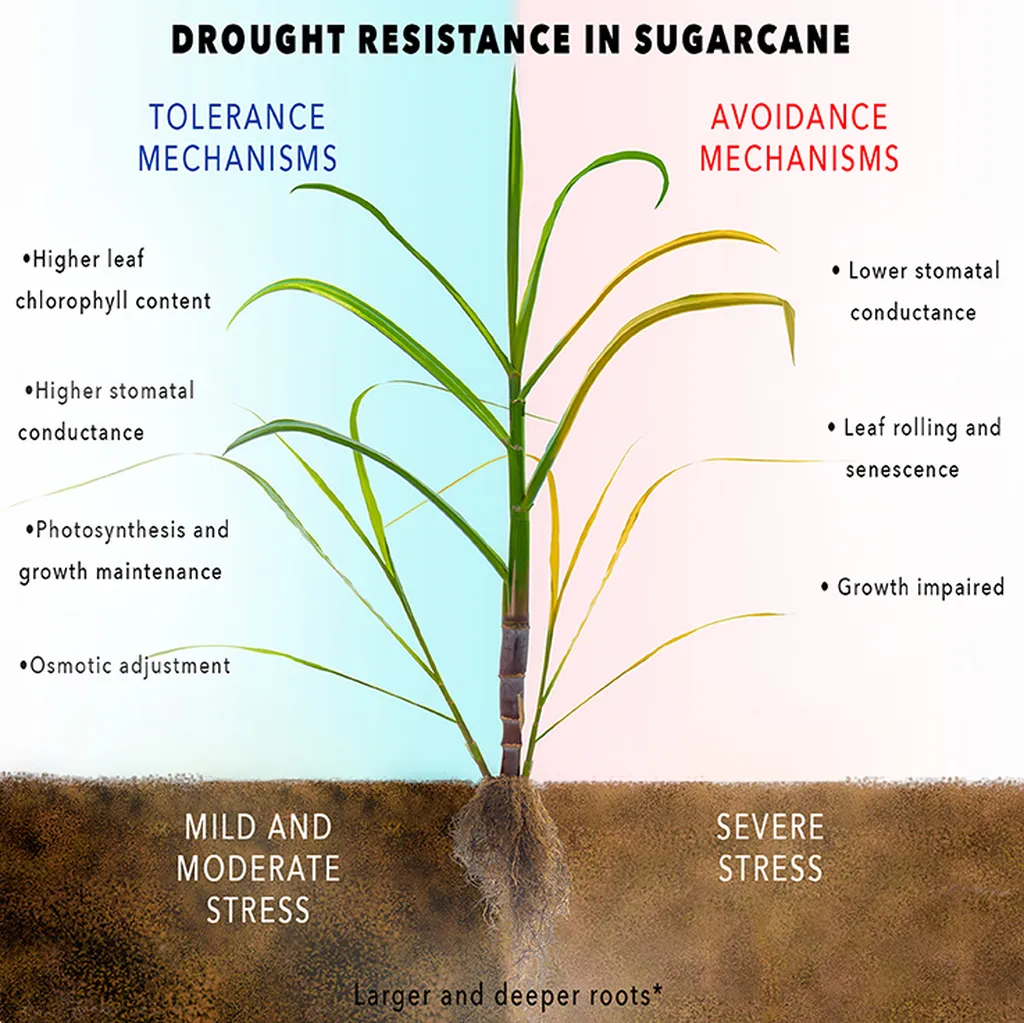
In the face of escalating drought conditions, the global agriculture sector is grappling with the urgent need for resilient crop varieties. A recent study published in the *Journal of Agriculture and Food Research* offers a promising breakthrough in the quest for drought-tolerant sugarcane, a crop vital for both food and energy security. Led by Sarawut Rungmekarat from the Department of Agronomy at Kasetsart University, the research identifies and characterizes mutant sugarcane clones that could revolutionize sugarcane farming under water-scarce conditions.
The study focused on 59 EMS-induced mutant sugarcane clones and the wild-type Khon Kaen 3, evaluating their performance under drought stress. Using DArTseq genotyping, the researchers revealed significant genetic diversity within the mutant population, demonstrating the potential for selective breeding to enhance drought tolerance. “The genetic distinctness observed in our mutant clones is a crucial first step in developing sugarcane varieties that can withstand the increasing challenges posed by climate change,” Rungmekarat explained.
Despite the complexities of analyzing polyploid genomes, the research employed advanced statistical methods, including Genome-Wide Association Studies (GWAS), Principal Component Analysis (PCA), and path coefficient analysis. These methods highlighted the importance of internode length and stalk length in determining yield under drought conditions. “Our findings suggest that focusing on these traits could significantly improve sugarcane yields in water-limited environments,” Rungmekarat added.
The study identified two mutant clones, KU-MTB11-9 and KU-MTB-tr2-2, which showed remarkable yield performance compared to the control. KU-MTB11-9 produced 14.86 kg per clump, more than double the control’s 6.52 kg, while also achieving a superior single stalk weight of 1.73 kg. These clones not only demonstrated higher yields but also maintained comparable sugar content, making them promising candidates for commercial cultivation.
The implications for the agriculture sector are substantial. As drought conditions become more prevalent, the development of resilient sugarcane varieties could stabilize food and energy supplies, benefiting farmers and industries alike. The research underscores the importance of genetic diversity and advanced breeding techniques in adapting crops to changing environmental conditions.
This study not only provides immediate solutions but also paves the way for future research. The methods and insights gained could be applied to other crops, accelerating the development of climate-resilient varieties across the agricultural spectrum. As the global community continues to grapple with the impacts of climate change, such innovations are crucial for ensuring food security and sustainable agricultural practices.
The research, led by Sarawut Rungmekarat from the Department of Agronomy at Kasetsart University and affiliated with the Center of Knowledge and Technology for Cane and Sugar, represents a significant step forward in the field of agritech. By leveraging genetic diversity and advanced analytical techniques, the study offers a blueprint for developing crops that can thrive in increasingly challenging environments. As the agriculture sector continues to evolve, such breakthroughs will be essential in meeting the demands of a growing population and a changing climate.