
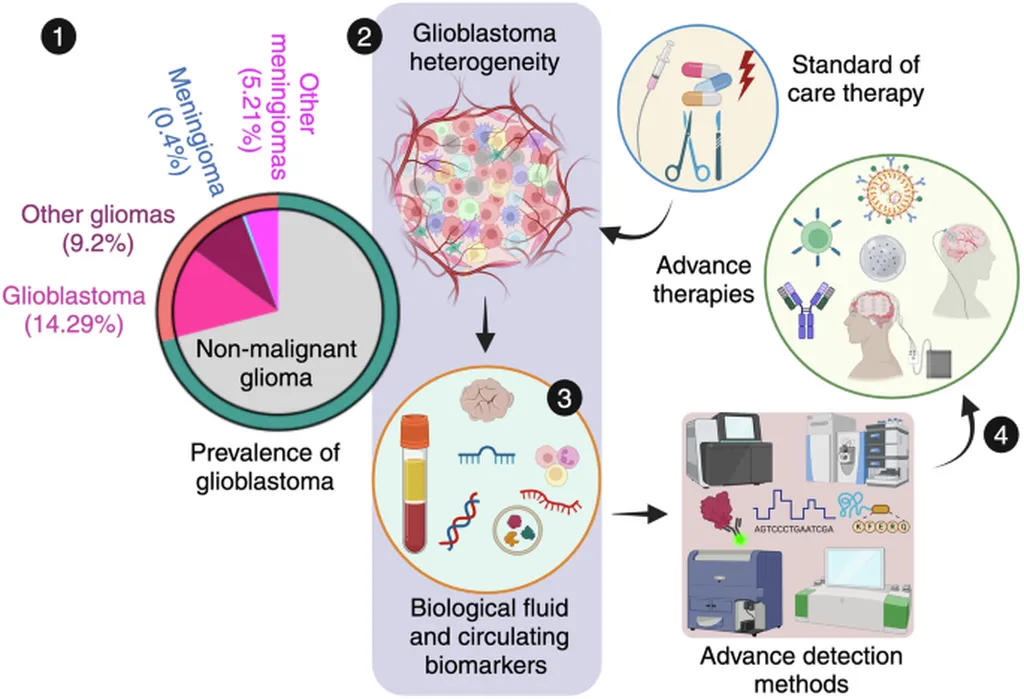
In a groundbreaking study published in *Advanced Science*, researchers have introduced a novel approach to combat glioblastoma (GB), the most aggressive and deadly primary brain tumor. The study, led by Vadim Le Joncour from the Neuroscience Center at the University of Helsinki, employs heparin-based nanoparticles (HP-NPs) to target drug-resistant glioma stem cells (GSCs) and reprogram them into less aggressive states. This innovative strategy could pave the way for more effective treatments and potentially impact other sectors, including agriculture, by advancing drug delivery technologies.
Glioblastomas are notorious for their infiltrative growth and resistance to conventional therapies. One of the key challenges in treating GB is the plasticity of cancer cells, which allows them to differentiate into drug-resistant mesenchymal-like (MES) states. These MES-like GSCs protect tumors from treatments, making glioblastoma particularly difficult to eradicate. The study introduces HP-NPs engineered to cross the blood-brain barrier and specifically target MES-like GSCs.
The researchers encapsulated doxorubicin (DOX), a commonly used chemotherapy drug, within the HP-NPs. This encapsulation not only reduces drug-mediated complement and coagulation cascades but also enhances hemocompatibility in human whole blood. In vitro studies demonstrated efficient uptake of HP-NPs by patient-derived GSCs, showing promise for clinical applications.
Preclinical evaluations in patient avatars revealed that plain HP-NPs outperformed DOX-loaded HP-NPs in reducing GB progression. Transcriptomic studies further showed that HP-NPs downregulate heparin-binding epidermal growth factor (HBEGF), shifting MES GSCs into less plastic astroglial-like cells. This reprogramming impairs tumorigenesis, offering a new paradigm in anticancer therapy.
“Our findings suggest that HP-NPs can effectively reprogram glioblastoma cells into less aggressive states, which could significantly improve therapeutic outcomes,” said Le Joncour. “This approach not only enhances the efficacy of existing treatments but also reduces the side effects associated with conventional chemotherapy.”
The study also highlighted the safety and tolerability of HP-NPs at therapeutic doses in healthy rats, indicating their potential for clinical translation. The ability of HP-NPs to cross the blood-brain barrier and target specific cell types could have broader implications beyond oncology. In agriculture, similar nanoparticle-based drug delivery systems could revolutionize the way pesticides and growth promoters are administered, reducing environmental impact and improving crop yields.
The commercial impact of this research could be substantial. By developing targeted drug delivery systems, agricultural biotechnology companies could create more efficient and sustainable solutions for pest management and plant health. This could lead to reduced chemical usage, lower costs, and improved environmental sustainability.
As the field of nanotechnology continues to evolve, the applications of HP-NPs and similar systems are likely to expand. Future research could explore the use of these nanoparticles in other types of cancer and neurological disorders, as well as in agricultural and environmental applications. The study by Le Joncour and his team represents a significant step forward in the fight against glioblastoma and highlights the potential of precision medicine to transform healthcare and beyond.
Published in *Advanced Science*, the research was led by Vadim Le Joncour from the Neuroscience Center at the University of Helsinki, part of the iCAN Digital Precision Medicine Flagship Program. This interdisciplinary collaboration underscores the importance of integrating advanced technologies to address complex medical challenges.