
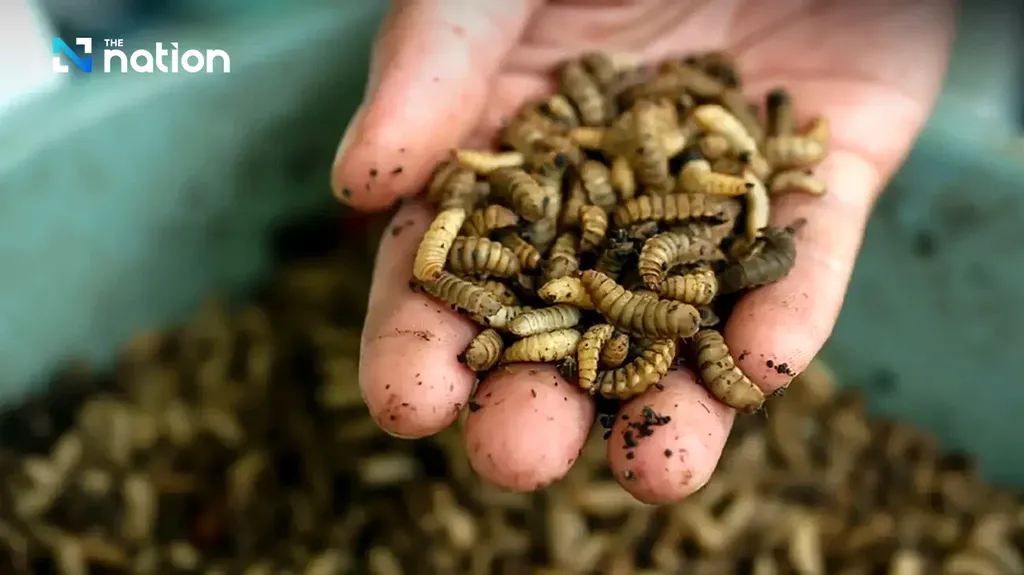
In the heart of Thailand, a humble insect is making waves in the world of sustainable agriculture. The black soldier fly, Hermetia illucens, is emerging as a star player in the quest for alternative protein sources, and new research is shedding light on its potential to revolutionize animal feed production.
Published in the journal ‘Frontiers in Insect Science’, a study led by Sarayut Pittarate from Chiang Mai University has evaluated the nutritional composition of black soldier fly larvae (BSFL) reared on various organic substrates. The findings are promising, with significant implications for the agriculture sector.
The research team cultivated BSFL on five different organic substrates: chicken feed, pig feed, soy milk residue, coconut press cake, and perilla cake. The results were striking. “We observed significant differences in the nutritional composition of the larvae depending on the substrate they were fed,” Pittarate explained. “This suggests that we can tailor the nutritional profile of BSFL to meet specific dietary requirements in animal feed.”
The study revealed that larvae fed on chicken feed, pig feed, soy milk residue, and perilla cake had high crude protein content, making them an attractive option for protein-rich animal feed. Moreover, the fatty acid profiles varied significantly among the different diets. For instance, larvae reared on coconut press cake showed the highest saturated fatty acid content, while those fed soy milk residue exhibited the highest levels of oleic and linoleic acids, which are essential fatty acids for many animals.
The commercial implications of this research are substantial. With the global demand for protein continuing to rise, the agriculture sector is under pressure to find sustainable and cost-effective feed solutions. BSFL offer a promising alternative, as they can be reared on organic by-products, reducing waste and contributing to a circular economy.
“This research opens up new possibilities for the agriculture sector,” Pittarate noted. “By utilizing organic by-products, we can produce high-quality, nutrient-rich insect-based feed. This not only addresses the issue of waste valorization but also contributes to food security and responsible consumption.”
The study also highlights the potential for regional adaptation. The substrates used in the research are commonly available in Thailand, demonstrating the feasibility of localized production. This could inspire similar initiatives in other regions, leveraging locally available resources to produce sustainable feed.
As the world grapples with the challenges of climate change, food security, and waste management, innovative solutions like BSFL-based feed offer a glimmer of hope. The research led by Pittarate and his team at Chiang Mai University is a testament to the power of scientific inquiry in driving sustainable development.
In the words of Pittarate, “This is just the beginning. There’s so much more to explore in the world of insect-based feed. The potential is immense, and the possibilities are endless.” As we look to the future, the humble black soldier fly might just play a pivotal role in shaping a more sustainable and food-secure world.