
In the ongoing quest to develop effective and environmentally friendly pest control methods, RNA interference (RNAi) has emerged as a promising tool. However, a recent review published in *Frontiers in Insect Science* sheds light on the complexities that could hinder the widespread application of RNAi-based insecticides. The study, led by Min Feng of the Guangdong Provincial Key Laboratory of Agro-animal Genomics and Molecular Breeding at South China Agricultural University, explores how the innate immune response and multiple functions of the RNAi machinery could complicate the use of RNAi in pest control.
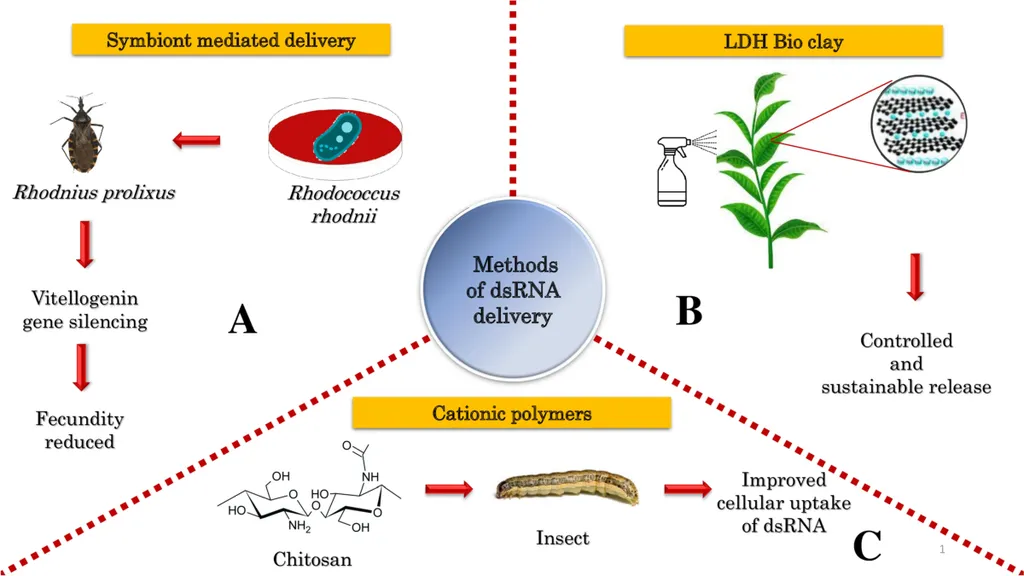
RNAi works by introducing double-stranded RNA (dsRNA) into insects, which then triggers a process that silences specific genes, ultimately leading to the pest’s demise. While this method has shown promise, particularly in leaf beetles where RNAi-based insecticides have already been marketed, the efficiency and reliability of this approach in other insects remain questionable.
One of the key challenges highlighted in the review is the recognition of dsRNA as a “pathogen-associated molecular pattern” (PAMP) by the insect’s immune system. This recognition can trigger an immune response that may interfere with the RNAi process. “The sensing of dsRNA as an immune trigger can modulate the function of Dicer-2 and Ago-2, which are crucial components of the RNAi machinery,” explains Feng. This modulation can complicate the efficiency of the exo-RNAi process, making it less effective in controlling pests.
Moreover, the review points out that the RNAi machinery in insects has multiple additional functions beyond gene silencing. These functions can be influenced by dsRNA-binding proteins, further adding to the complexity of using RNAi as a pest control method. “The multiple functions of the canonical siRNA factors and the modulation of the function of Dicer-2 and Ago-2 by dsRNA-binding proteins may aggravate the application of RNAi for pest control,” says Feng.
The commercial implications of these findings are significant. For the agriculture sector, which is increasingly looking towards sustainable and targeted pest control methods, the challenges highlighted in this review could mean that RNAi-based insecticides may not be a one-size-fits-all solution. Farmers and agricultural companies may need to invest in further research and development to overcome these hurdles and tailor RNAi-based approaches to specific pests and crops.
Looking ahead, this research underscores the need for a deeper understanding of the intricate interactions between the RNAi machinery and the immune system in different insect species. As Feng notes, “It is prudent to include the sensing of dsRNA as an immune trigger to evaluate the extent of the RNAi mechanism that is triggered by dsRNA.” This understanding could pave the way for more effective and reliable RNAi-based pest control methods, ultimately benefiting the agriculture sector and promoting sustainable farming practices.
In the meantime, the review serves as a cautionary tale, reminding us that while RNAi holds great promise, its application in pest control is not without challenges. As the agriculture sector continues to explore and invest in this technology, it will be crucial to consider the complexities highlighted in this research to ensure the successful and sustainable use of RNAi-based insecticides.