
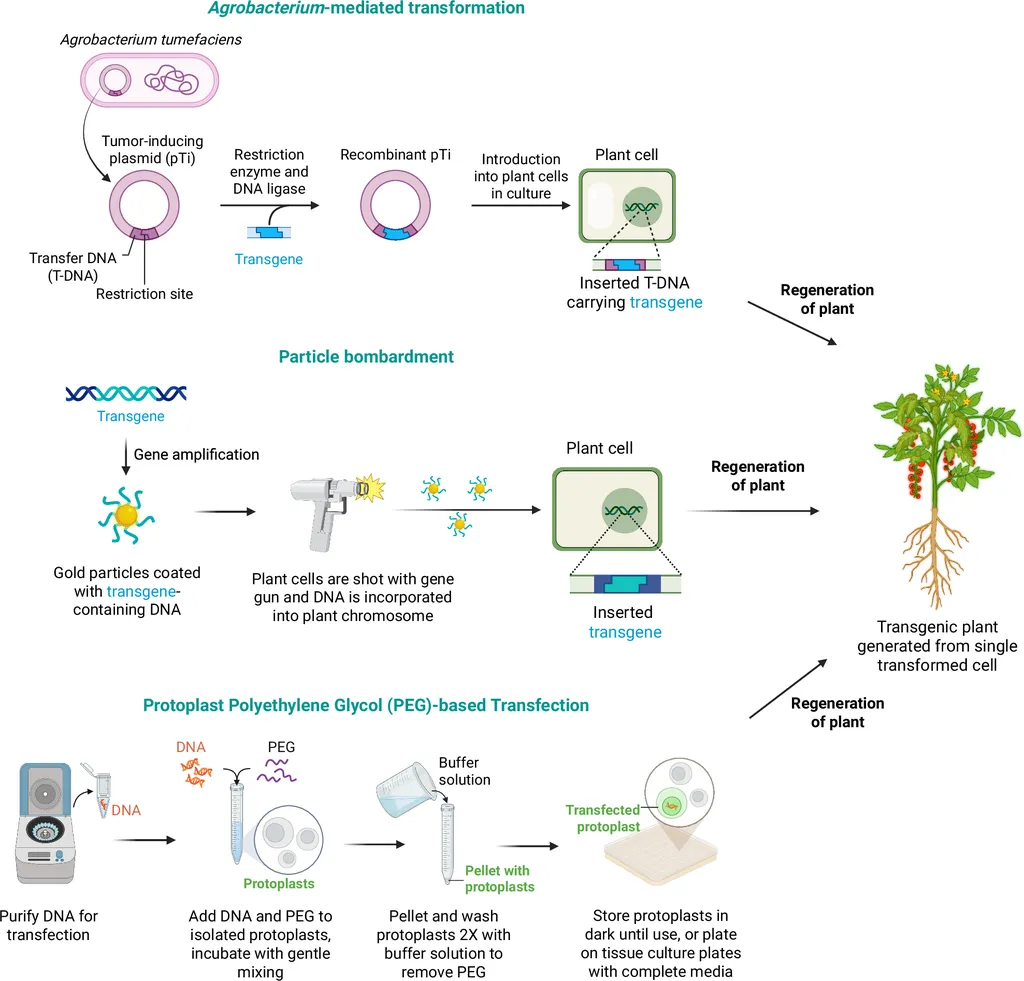
In the ever-evolving landscape of agricultural biotechnology, a recent study published in *Academia Molecular Biology and Genomics* sheds light on the intricate process of T-DNA integration in plants, offering insights that could revolutionize the way we approach genetic transformation. Led by Naveen Kumar Singh from the Department of Life Science at the Central University of South Bihar, the research delves into the mechanisms behind T-DNA integration, highlighting the limitations of conventional detection methods and the promising advancements brought forth by Next-Generation Sequencing (NGS).
The integration of T-DNA into the plant genome is a critical event that determines the stability and expression of integrated genes, as well as the regulatory acceptability of transgenic plants. Traditional methods, such as PCR and Southern hybridization, have long been the cornerstone of detecting T-DNA integration. However, these methods often fall short in accurately pinpointing T-DNA loci due to the randomness of the integration process, which can lead to chromosomal rearrangements.
“Conventional detection techniques have served us well, but they have their limitations,” Singh explains. “The randomness of T-DNA integration can result in chromosomal rearrangements, making it challenging to accurately detect and analyze the integration sites.”
Enter Next-Generation Sequencing (NGS), a technology that is rapidly becoming a game-changer in the field of agricultural biotechnology. NGS offers a more comprehensive and accurate approach to detecting T-DNA integration, addressing the limitations of conventional methods. When integrated with CRISPR-Cas9 technology, NGS can provide even more precise and detailed insights into the integration process.
The implications of this research for the agriculture sector are profound. By enhancing our understanding of T-DNA integration mechanisms, we can improve the reliability and effectiveness of transgenic plant development. This, in turn, can lead to the development of crops with enhanced traits, such as disease resistance, drought tolerance, and improved nutritional content.
“The advancements in NGS technology are truly exciting,” Singh remarks. “They offer us a more detailed and accurate picture of T-DNA integration, which can greatly enhance our ability to develop transgenic plants with desirable traits.”
As we look to the future, the integration of NGS and CRISPR-Cas9 technologies holds immense promise for the field of agricultural biotechnology. By providing a more precise and comprehensive understanding of T-DNA integration, these technologies can pave the way for the development of crops that are not only more resilient but also more sustainable and nutritious.
In the words of Singh, “The future of agricultural biotechnology lies in our ability to harness the power of these advanced technologies. By doing so, we can unlock the full potential of transgenic plants and contribute to a more sustainable and food-secure future.”
As the agricultural sector continues to grapple with the challenges posed by climate change, population growth, and resource scarcity, the insights provided by this research offer a beacon of hope. By embracing the advancements in NGS and CRISPR-Cas9 technologies, we can take significant strides towards developing crops that are better equipped to meet the demands of the 21st century and beyond.