
In the heart of China’s Henan province, researchers have uncovered a promising ally in the fight against cadmium (Cd) contamination in agricultural soils. A strain of Bacillus velezensis, designated ZM202201, has demonstrated remarkable potential to enhance wheat’s tolerance to Cd stress, offering a sustainable solution to a pressing agricultural challenge.
Cadmium contamination in soils is a significant threat to wheat production and global food safety. This heavy metal, often a byproduct of industrial processes and phosphate fertilizers, can accumulate in plants, posing risks to both crop yields and human health. Traditional remediation methods can be costly and environmentally damaging, making the discovery of plant growth-promoting bacteria (PGPB) like ZM202201 particularly exciting.
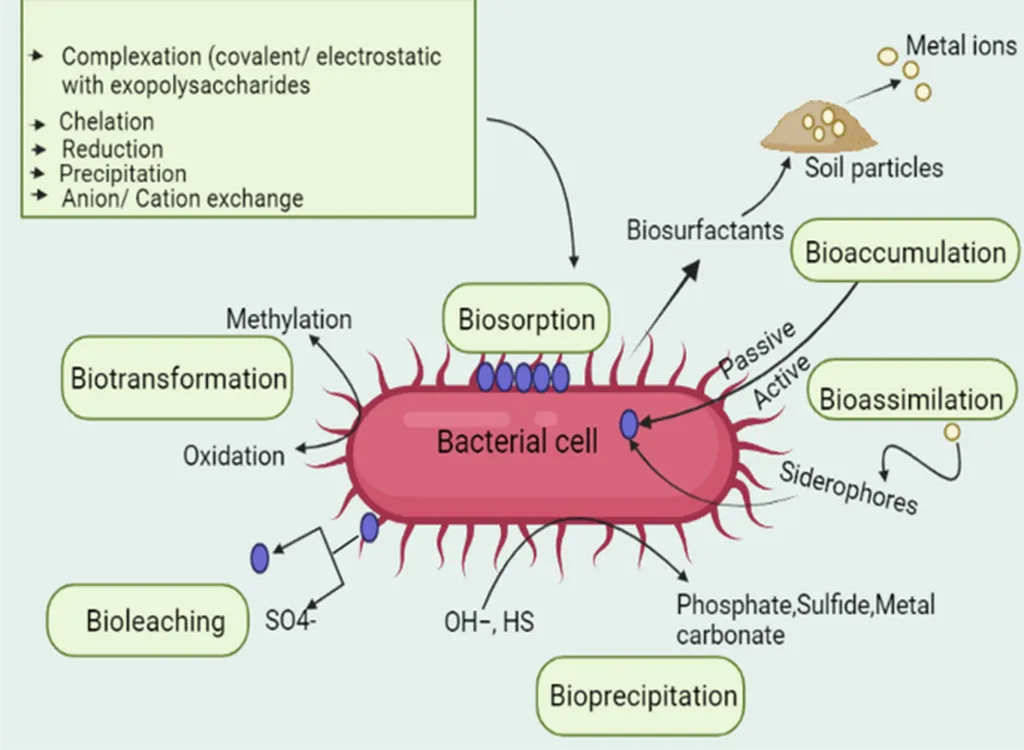
The research, published in the journal *Plant Stress*, reveals that ZM202201 exhibits multiple plant growth-promoting attributes. “This strain is a powerhouse,” says lead author Mo Zhu, a researcher at Henan Normal University. “It produces indole-3-acetic acid, secretes siderophores, and even fixes nitrogen, all of which contribute to plant growth.”
But the real magic happens under Cd stress. Inoculation with ZM202201 significantly improved wheat growth parameters, reducing oxidative damage and enhancing antioxidant capacity. “The plants were not just surviving; they were thriving,” Zhu explains. “We saw increased activities of key antioxidant enzymes like superoxide dismutase, peroxidase, and catalase.”
The study’s transcriptomic profiling revealed that ZM202201 activates Cd detoxification pathways, upregulating ABCC-type transporters involved in vacuolar sequestration of Cd. This means the bacteria help the plant to compartmentalize and neutralize the heavy metal, preventing it from causing cellular damage.
The implications for the agriculture sector are substantial. With Cd contamination affecting soils worldwide, ZM202201 could be a game-changer for sustainable wheat cultivation. “This is not just about improving yields; it’s about ensuring food safety and security,” Zhu emphasizes.
The research also opens up new avenues for exploring the use of PGPB in phytoremediation—the use of plants to clean up contaminated soils. By enhancing the plant’s natural detoxification mechanisms, bacteria like ZM202201 could make phytoremediation more efficient and effective.
Looking ahead, the potential for commercial applications is significant. Microbial inoculants based on ZM202201 could be developed to help farmers grow healthy crops in Cd-contaminated soils, reducing the need for expensive and environmentally harmful remediation methods.
As the global population continues to grow, the demand for sustainable and efficient agricultural practices will only increase. Research like this, conducted by scientists at institutions such as Henan Normal University and the University of Würzburg, is paving the way for a future where agriculture and environmental sustainability go hand in hand.