
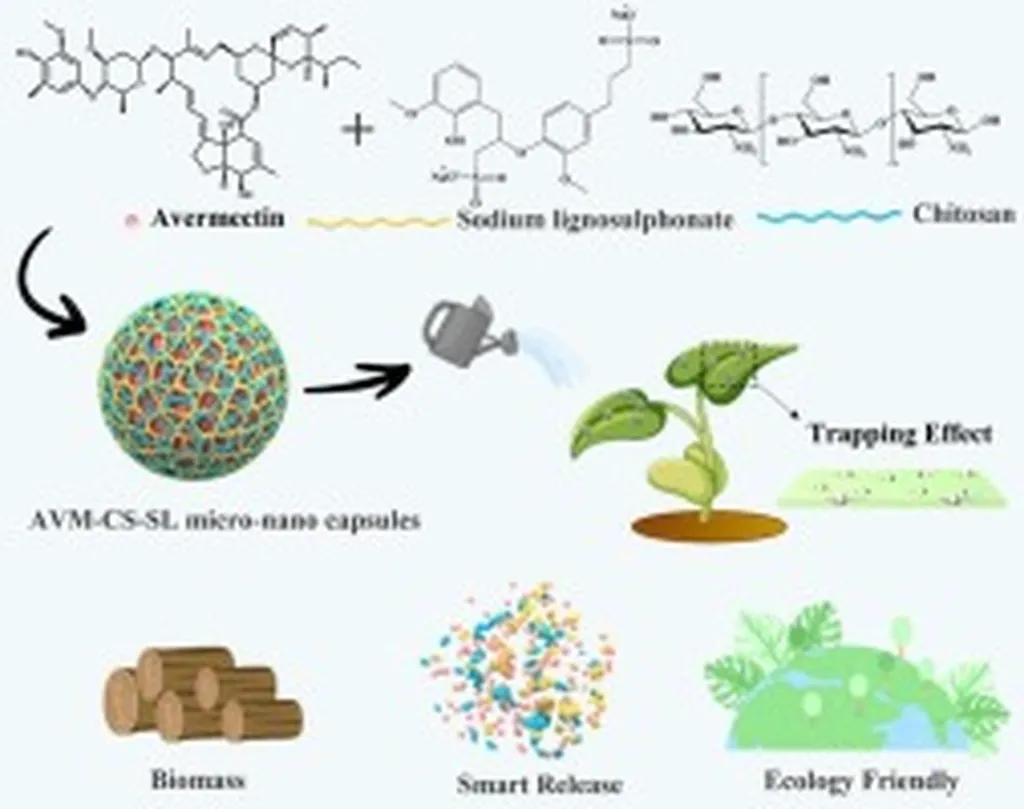
In the quest to balance agricultural productivity with environmental and food safety, researchers have developed a novel, sustainable pesticide delivery system that could revolutionize how we approach pest control. This innovative solution, detailed in a recent study published in *Advanced Science*, leverages lignin coacervates—bio-based materials derived from industrial byproducts—to enhance pesticide efficacy while minimizing ecological impact.
The research, led by Xuan Li at the Center of Biomass Engineering/College of Agronomy and Biotechnology at China Agricultural University, addresses a critical challenge in modern agriculture: improving pesticide adhesion and spreading on plant surfaces without exacerbating residues. Traditional methods often lead to excessive pesticide use, which can harm non-target organisms and contaminate food supplies. The new delivery system encapsulates the hydrophobic pesticide abamectin within lignin coacervates, formed through hydrophobic and electrostatic interactions between aminated alkaline lignin and sodium lignosulfonate.
“This approach not only improves pesticide retention on leaves but also enhances resistance to ultraviolet degradation,” explains Li. “It ensures strong adhesion and wetting, which are crucial for reducing spray drift and runoff.”
One of the most significant advantages of this system is its ability to release the pesticide in a controlled manner, triggered by pH levels and laccase enzymes present in the biological environment of target pests. This targeted release mechanism supports prolonged action, reducing the need for frequent applications and lowering overall pesticide use.
The environmental benefits are substantial. By physically shielding the active ingredient, the coacervates reduce non-target exposure and ecological toxicity by a factor of two to three. Additionally, the formulation is easily removable under household washing, ensuring that foodborne residues can be completely eliminated with just a few rinses.
The commercial implications for the agriculture sector are profound. Farmers can achieve higher crop yields with fewer environmental and health risks, aligning with the growing demand for sustainable and safe food production. The use of industrial byproducts like lignin also provides an economic incentive, as it adds value to materials that would otherwise be discarded.
“This research opens up new possibilities for sustainable agriculture,” says Li. “It demonstrates that we can enhance pesticide efficacy while significantly reducing environmental and food safety risks.”
The study’s findings could pave the way for future developments in pesticide delivery systems, encouraging further research into bio-based materials and targeted release mechanisms. As the agriculture sector continues to seek innovative solutions to meet global food demands, this research offers a promising step toward a more sustainable and safe future.