
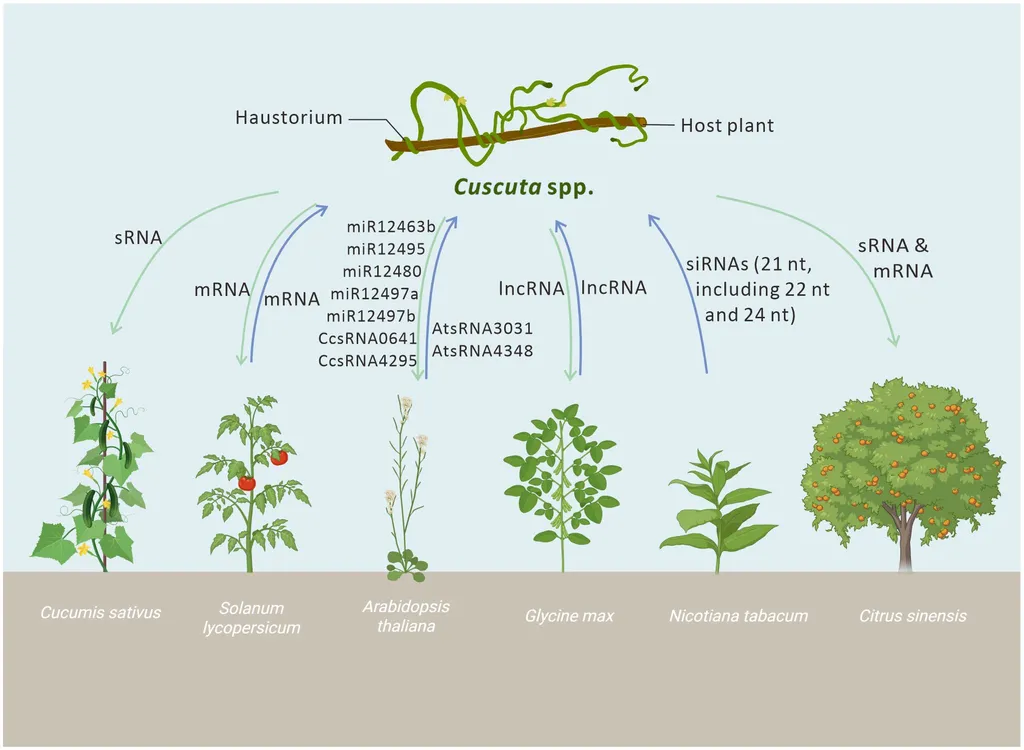
In a groundbreaking study published in *Advanced Science*, researchers have uncovered a novel mechanism in plants that could revolutionize our understanding of nutrient deficiency responses and potentially pave the way for more resilient crops. The research, led by Weiguo Dong from the State Key Laboratory of Plant Environmental Resilience at Zhejiang University, delves into the intricate world of mobile mRNAs and their role in phosphate (Pi) starvation responses.
Plants, much like humans, have sophisticated systems to cope with nutrient deficiencies. When faced with a lack of phosphate, a crucial nutrient for growth, plants initiate a complex response known as the phosphate starvation response (PSR). This study reveals that during PSR, hundreds of specific mobile mRNAs are transported from the site of production to distant tissues. These mobile mRNAs, the researchers found, are regulated by the PHOSPHATE STARVATION RESPONSE (PHR) pathway, a key player in the plant’s response to low phosphate conditions.
What makes this discovery particularly intriguing is that these mobile mRNAs are not translated into proteins in the recipient tissues. Instead, they seem to carry out a function independently of their encoded protein, suggesting that they might act as noncoding transcripts. “This is a significant departure from our traditional understanding of mRNA function,” says Dong. “It opens up new avenues for exploring how plants communicate and adapt to nutrient stress.”
The study also uncovered that these PSR-specific mobile mRNAs have a more unfolded 5′ untranslated region (UTR) compared to other mRNAs. This structural feature might be crucial for their mobility and function. “The unfolded 5′ UTR could be a key to understanding how these mRNAs are selected for transport and what makes them unique,” Dong explains.
The implications of this research for the agriculture sector are substantial. By understanding how plants respond to nutrient deficiencies, scientists can potentially develop crops that are more efficient at utilizing nutrients, leading to increased yields and reduced fertilizer use. This could have a significant impact on global food security, especially in regions where soil quality is poor.
Moreover, the discovery of noncoding functions for these mobile mRNAs could open up new frontiers in plant biotechnology. “If we can harness these mobile mRNAs to enhance nutrient use efficiency or stress resilience, we might be able to create crops that are better equipped to deal with the challenges of climate change,” Dong speculates.
This research not only sheds light on the complex world of plant biology but also offers a glimpse into the future of agriculture. As we face the challenges of a changing climate and a growing global population, understanding and leveraging these intricate plant mechanisms could be a game-changer. The study, led by Weiguo Dong from the State Key Laboratory of Plant Environmental Resilience at Zhejiang University, represents a significant step forward in this exciting field.