
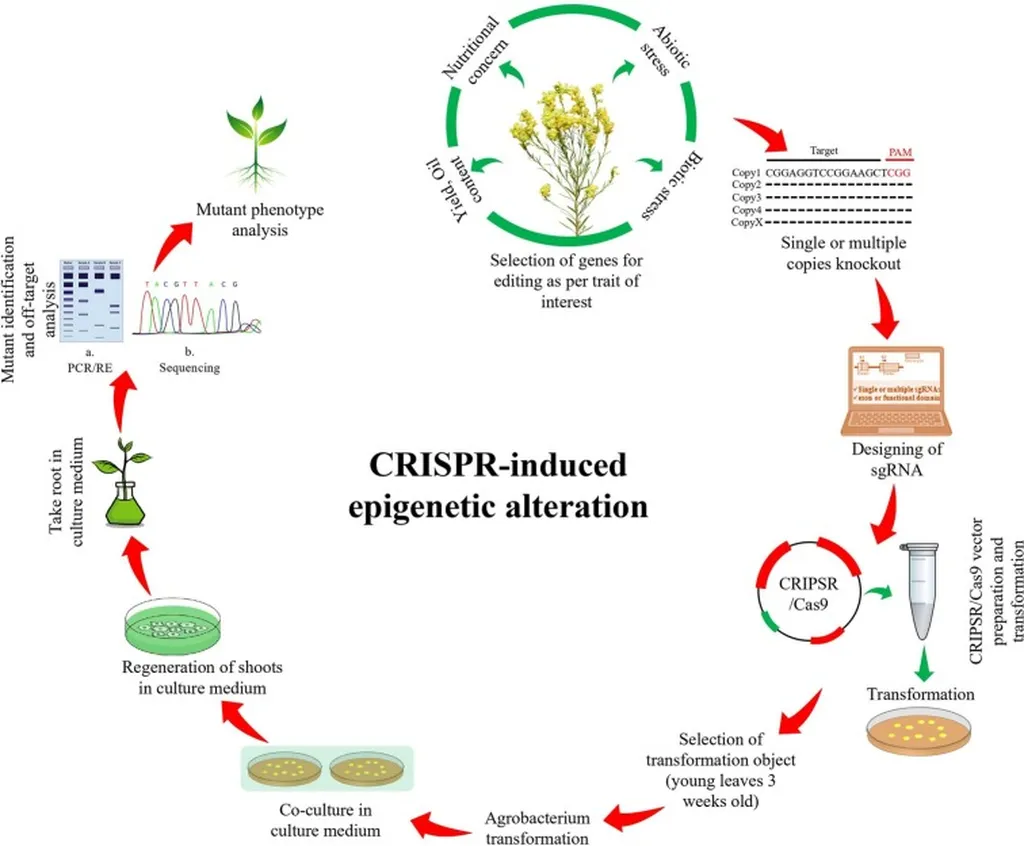
In the vast and complex world of plant genomics, a recent study has shed new light on the epigenetic landscape of pepper plants (Capsicum spp.), offering insights that could have significant implications for agriculture. Published in the journal ‘Epigenetics & Chromatin’, the research led by Ye Liu from the Provincial Key Laboratory of Biotechnology of Shaanxi, delves into the DNA methylome of Capsicum spp., with a particular focus on C. annuum ST-8.
DNA methylation is a crucial epigenetic modification that plays a significant role in gene regulation and is known to be highly heritable. The study reveals that the genomes of Capsicum spp. are heavily methylated, especially in the non-CG contexts. This is particularly interesting when compared to wheat, which has a larger genome but a lower proportion of non-CG methylation.
One of the most intriguing findings of the study is the observation of genic non-CG methylation, which is likely maintained by the CMTs (chromomethylases) rather than the RdDM (RNA-directed DNA methylation) pathway. “This suggests a unique epigenetic regulatory mechanism in pepper plants that could be exploited for crop improvement,” says Ye Liu, the lead author of the study.
The research also uncovered a negative relationship between gene expression and H3K9me2 (a specific type of histone modification), and a positive relationship between genic non-CG methylation and H3K9me2. This finding could pave the way for new strategies in plant breeding and biotechnology, as understanding these epigenetic markers can help in developing crops with desired traits.
Moreover, the study explored the impact of salt stress on the epigenetic landscape of pepper plants. The researchers found that the overall negative relationship between transcription and H3K9me2 is stably maintained regardless of environmental stimuli and developmental stages. This could be a game-changer for agriculture, as it provides a potential epigenetic marker for salt tolerance, a trait highly sought after in crop plants.
The implications of this research are vast. By understanding the epigenetic regulatory mechanisms in pepper plants, scientists can develop more resilient and productive crops. This could lead to increased yields, improved nutritional content, and enhanced resistance to environmental stresses, all of which are critical for meeting the growing global demand for food.
As we look to the future, this study opens up new avenues for research in plant epigenetics. It highlights the need for further exploration of epigenetic regulatory mechanisms in other crop plants and the potential for epigenetic editing to improve crop traits. The findings of this study could shape the future of agriculture, making it more sustainable and productive in the face of a changing climate and growing population.
In the words of Ye Liu, “This is just the beginning. The more we understand about the epigenetic landscape of our crops, the better equipped we will be to tackle the challenges of the future.”