
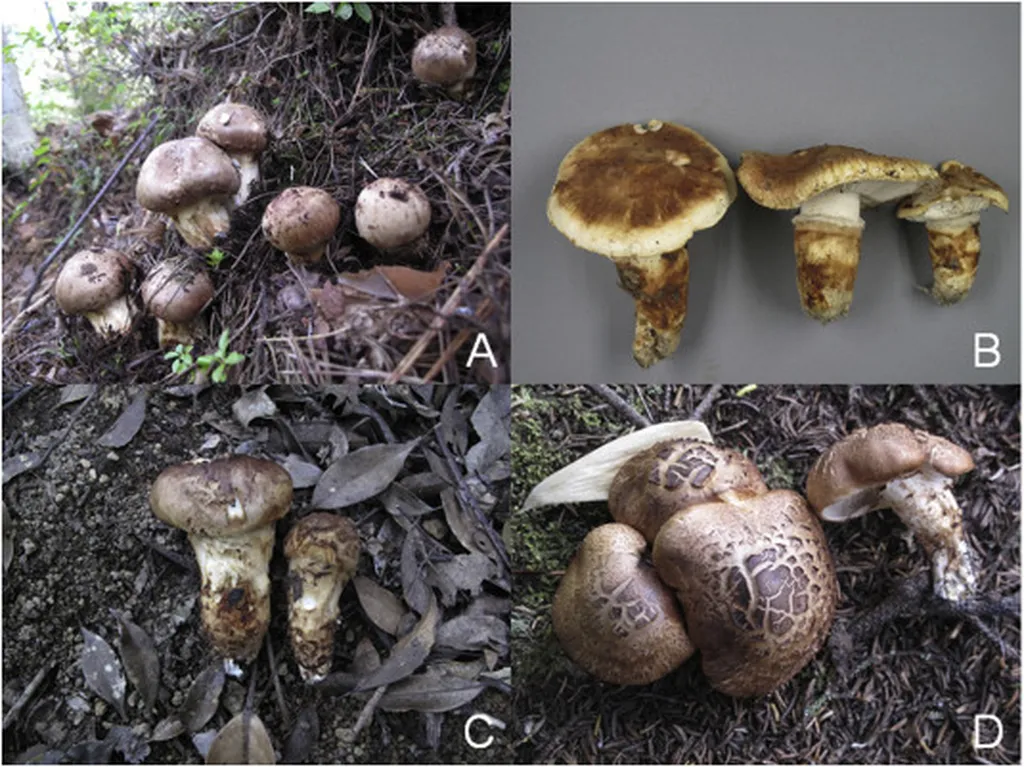
In a groundbreaking study published in the journal *Microbiome*, researchers have uncovered a unique symbiotic relationship between the ectomycorrhizal (ECM) fungus Tricholoma matsutake and the soil microbiome, shedding light on metabolic synchronization that could revolutionize agricultural practices. The research, led by In Hyup Bae from the Department of Agricultural Biotechnology at Seoul National University, employed multi-meta-omics approaches to reveal how T. matsutake influences soil microbial communities and their metabolic activities.
Ectomycorrhizal fungi are known to form symbiotic relationships with plant roots, enhancing nutrient uptake and improving plant health. However, the intricate molecular interactions and metabolic shifts occurring in these ecosystems have remained largely unexplored. Bae and his team found that T. matsutake induces significant changes in soil microbial communities, altering soil moisture, nitrogen, and phosphorus levels. “This fungus doesn’t just coexist with the soil microbiome; it actively reshapes it,” Bae explained.
The study revealed that the presence of T. matsutake enriches microbiome-wide metabolic capacities, including glutamate metabolism, oligopeptide transport, and siderophore activity. Metatranscriptome data showed that the fungus triggers functional remodeling in nitrogen metabolism, with both the fungus and soil microbiome upregulating nitrate reduction, glutamate biosynthesis, tryptophan biosynthesis, and indole-3-acetic acid (IAA) biosynthesis. “The metabolic synchronization between the fungus and the microbiome is a fascinating discovery,” Bae noted. “It suggests a level of cooperation that we haven’t seen before in mycorrhizal systems.”
The research also identified potential T. matsutake helper bacteria, including Conexibacter and Paraburkholderia, and demonstrated that the fungus influences phage distributions, increasing temperate phage populations. The differential expression of auxiliary metabolic genes indicated that phages could enhance bacterial fitness in response to T. matsutake colonization.
The commercial implications of this research are substantial. Understanding and harnessing these symbiotic relationships could lead to the development of more resilient and productive agricultural systems. By optimizing the interactions between ECM fungi, soil microbiomes, and plants, farmers could enhance nutrient uptake, improve soil health, and reduce the need for chemical fertilizers. This could not only boost crop yields but also promote sustainable farming practices.
The study’s findings open new avenues for research into mycorrhizal symbiosis and its applications in agriculture. As Bae and his team continue to explore these complex interactions, the potential for innovative agricultural technologies grows. The integration of multi-meta-omics approaches in future studies will be crucial in unraveling the full extent of these symbiotic relationships and their impact on plant health and productivity.