
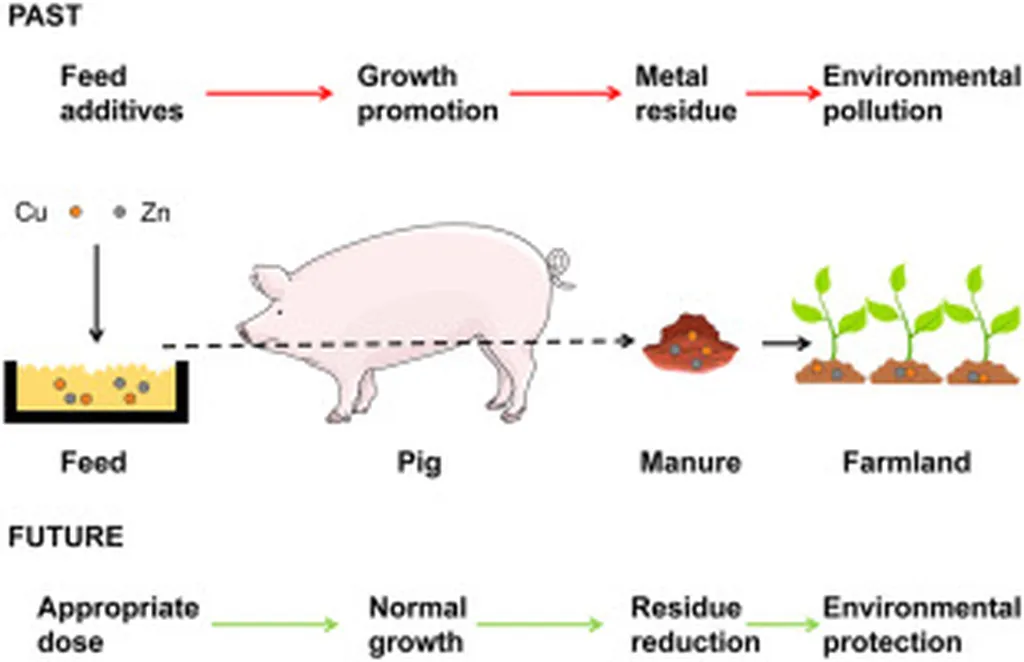
In the ever-evolving landscape of animal husbandry, researchers are continually seeking innovative strategies to bolster the health and productivity of livestock. A recent study published in *Frontiers in Veterinary Science* offers promising insights into the use of specialized zinc and copper supplements for weanling piglets, potentially reshaping industry practices and enhancing animal welfare.
The study, led by Luca Marchetti from the Department of Veterinary Medicine and Animal Sciences at the University of Milan, investigated the effects of varying zinc and copper ratios on gut health, immune response, and fecal microbiota composition in piglets. The trial involved 84 piglets divided into four groups, each receiving different combinations of potentiated zinc oxide (Pot-ZnO) and monovalent copper oxide (Cu2O) at European and non-European recommended levels.
One of the key findings was the significant improvement in fecal scores in the positive control group, which received conventional zinc oxide, compared to the group receiving European-level supplements. This indicates that higher zinc levels might be more effective in the immediate post-weaning period. “The initial phase is critical for piglets as they transition from maternal milk to solid feed,” Marchetti explained. “Our findings suggest that tailored supplementation can make a substantial difference in their gut health and overall well-being.”
The study also revealed that serum immunoglobulin A levels increased in the Non-EU− group compared to the positive control group, suggesting a potential boost in immune response. Additionally, serum diamine oxidase levels decreased in the positive control and Non-EU+ groups, indicating improved intestinal barrier function. “These biomarkers are crucial indicators of gut health,” Marchetti noted. “They provide a window into how different supplementation strategies can influence the immune system and gut permeability.”
Fecal microbiota analysis showed notable changes in the composition of bacterial genera among the different treatment groups. The Non-EU− group exhibited lower diversity metrics compared to the EU group, highlighting the impact of supplementation on microbial communities. “Understanding these microbial shifts is essential for developing targeted nutritional strategies that promote a healthy gut microbiome,” Marchetti added.
The commercial implications of this research are substantial. As the agriculture sector seeks to optimize animal health and productivity, the use of specialized zinc and copper supplements could offer a cost-effective and sustainable solution. By enhancing gut health and immune response, farmers can reduce the incidence of diseases, improve growth rates, and ultimately increase profitability.
This study not only sheds light on the potential benefits of Pot-ZnO and Cu2O but also underscores the importance of tailored supplementation strategies. As Marchetti and his team continue to explore these findings, the agriculture sector can look forward to more innovative solutions that prioritize animal welfare and sustainable practices.
In the words of Marchetti, “This research is just the beginning. The insights we’ve gained will pave the way for further studies and practical applications that can transform the way we care for our livestock.” As the industry moves towards more precise and effective nutritional strategies, the future of animal husbandry looks brighter than ever.