
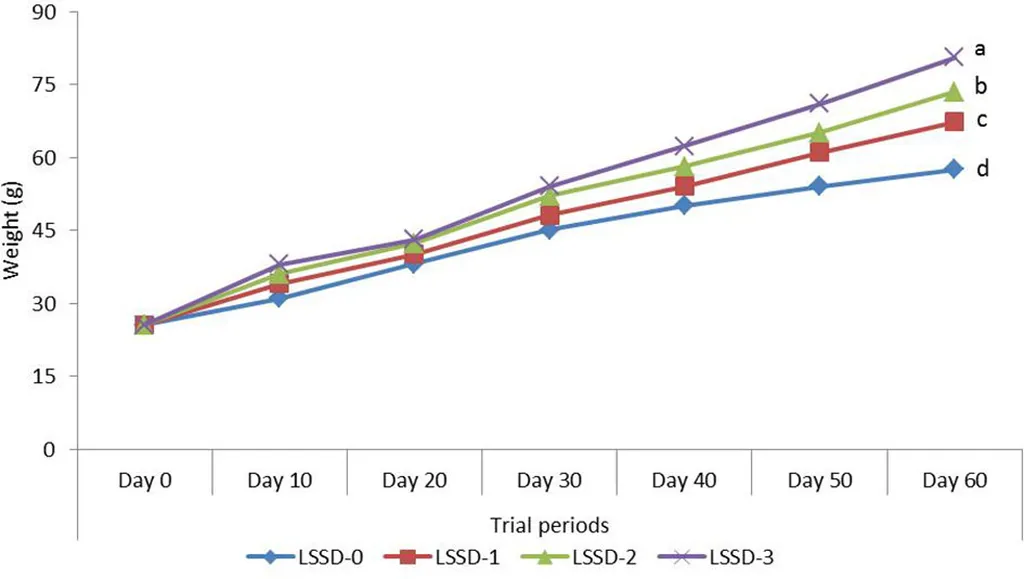
In a groundbreaking study published in *Aquaculture Reports*, researchers have uncovered the potential of bottle gourd (Lagenaria siceraria) fruit powder to revolutionize fish farming. The study, led by Ragaa A. Ahmed from the Department of Aquaculture at Aswan University, Egypt, explored how supplementing fish diets with this powder could enhance growth, health, and disease resistance in hybrid red tilapia fingerlings.
The research divided fish into four groups, each receiving different doses of L. siceraria fruit powder. Over 70 days, the fish fed diets containing 6 g/kg of the powder showed the most significant improvements. “The LS6 group exhibited the most substantial effects across nearly all parameters,” Ahmed noted, highlighting the potential of this supplement.
The findings are promising for the aquaculture industry. The study revealed that L. siceraria supplementation improved growth parameters and crude protein content in the fish. It also enhanced serum biomarkers, including lysozyme, phagocytic activity, and white blood cell counts, indicating a boost in the fish’s immune response. “Feeding L. siceraria at all doses significantly increased serum biomarkers,” Ahmed explained, underscoring the powder’s potential to fortify fish health.
Moreover, the study found that L. siceraria supplementation increased the expression of proinflammatory cytokines and antioxidant genes, which are crucial for fighting infections and maintaining overall health. The fish’s intestinal structure also improved, with elongated, branched villi, and their liver structure showed minimal hepatocyte vacuolation, suggesting better tissue health.
One of the most striking results was the increased resistance to bacterial infections. When challenged with Enterococcus faecalis, the relative percent survival (RSP) in fish fed 6 g/kg L. siceraria was 81%, compared to just 37% in the control group. This finding could have significant implications for the aquaculture industry, where bacterial infections often lead to substantial losses.
The study’s results suggest that L. siceraria fruit powder could be a sustainable and cost-effective dietary supplement for fish farming. As the global demand for seafood continues to rise, finding innovative ways to enhance fish health and productivity is crucial. This research could pave the way for further studies on the use of plant-based supplements in aquaculture, potentially leading to more sustainable and profitable fish farming practices.
In the words of Ahmed, “This study demonstrates the potential of L. siceraria as a sustainable dietary supplement in aquaculture.” The findings could indeed shape future developments in the field, offering a promising solution to some of the industry’s most pressing challenges.