
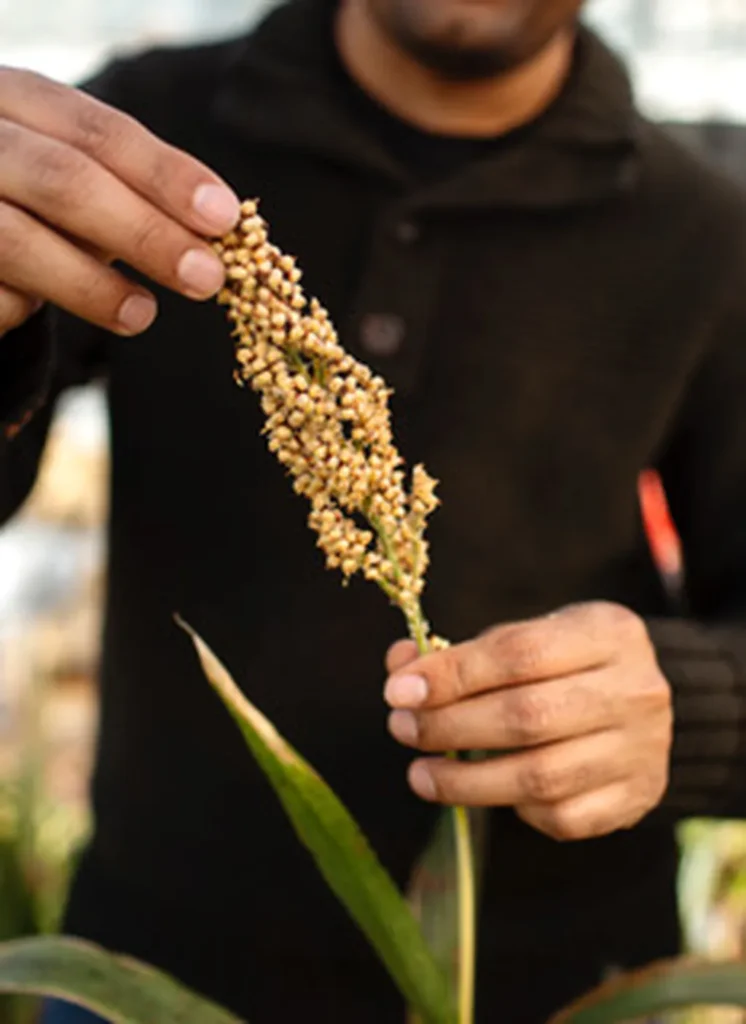
In the quest to enhance the nutritional value of sorghum, a staple crop for millions in semi-arid regions, researchers have made significant strides in understanding the complex mechanisms behind carotenoid accumulation in grains. A recent study published in *Frontiers in Plant Science* has shed light on the intricate interplay between gene expression and carotenoid metabolism, offering promising avenues for the development of nutritionally enhanced sorghum varieties.
Sorghum, known for its resilience in harsh climates, has long been a vital food source. However, its low carotenoid content has limited its potential to combat vitamin A deficiency. To address this, researchers led by Wenzhen Li from the Guizhou Key Laboratory of Biology and Breeding for Specialty Crops analyzed five sorghum varieties with distinct grain colors—white, gray, yellow, red, and black—using a combination of targeted metabolomic and transcriptomic approaches.
The study identified 37 carotenoid compounds across the varieties, with lutein being the most abundant. Notably, the yellow-grained variety stood out with the highest total carotenoid content, while the red-grained variety, despite having the lowest overall content, accumulated several unique carotenoids. This finding underscores the complexity of carotenoid composition and its regulation.
“Our results demonstrate that grain color alone does not reliably predict carotenoid composition,” said Li. “Other pigments such as anthocyanins and tannins also contribute to grain coloration, making it essential to look beyond the surface.”
The transcriptomic analysis pinpointed nine key genes involved in carotenoid metabolism, including those responsible for precursor supply, core biosynthesis, xanthophyll modification, and carotenoid catabolism. These genes exhibited distinct expression patterns among the varieties, indicating a coordinated regulation of carotenoid biosynthesis and degradation. Notably, the genes PDS and CYP716A1 were significantly associated with the accumulation of β-carotene, lutein, and zeaxanthin.
“This study provides a comprehensive understanding of the transcriptionally regulated carotenoid metabolic network in sorghum,” Li explained. “By identifying PDS and CYP716A1 as promising targets, we can pave the way for the development of nutritionally enhanced sorghum varieties.”
The implications of this research are far-reaching for the agriculture sector. By elucidating the molecular mechanisms underlying carotenoid accumulation, breeders can develop sorghum varieties with higher nutritional value, addressing vitamin A deficiency in regions where sorghum is a dietary staple. This not only improves public health but also enhances the commercial value of sorghum, making it a more attractive crop for farmers and agribusinesses.
Moreover, the insights gained from this study can be applied to other crops, fostering a broader impact on global food security and nutritional improvement. As the world grapples with the challenges of climate change and food scarcity, such advancements in agritech are crucial for building a more resilient and sustainable food system.
In the words of Li, “This research is a stepping stone towards creating crops that are not only resilient but also nutritionally dense, ultimately contributing to a healthier and more food-secure world.”