
In the face of growing global food security challenges, scientists are turning to innovative solutions to bolster crop resilience against environmental stressors. A recent study published in *Frontiers in Plant Science* sheds light on the adaptive responses of Vigna species—crops known for their high protein content—to salinity stress, offering promising avenues for sustainable agriculture.
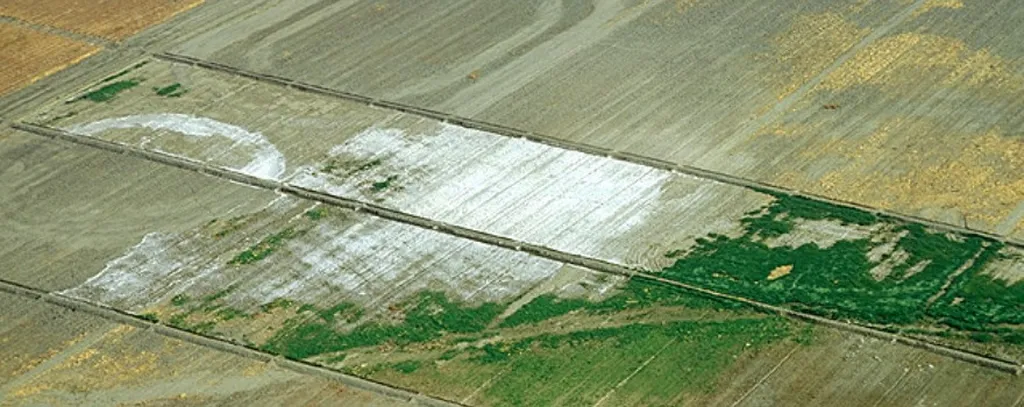
Salinity is a significant abiotic stress that severely hampers agricultural yield, particularly in irrigated and less fertile areas. Vigna species, which include crops like mung beans and cowpeas, are vital protein sources but are highly susceptible to salt stress. This stress impairs seed germination, delays seedling growth, disrupts nutrient uptake, and inhibits photosynthetic mechanisms, ultimately leading to significant yield loss.
The study, led by Sekar Suriya, a Research Scholar in Agricultural Biotechnology at the Vellore Institute of Technology in India, delves into the physiological, biochemical, and molecular responses of Vigna species to salinity. “Understanding these adaptive mechanisms is crucial for developing strategies to mitigate the adverse effects of salinity on crop yield,” Suriya explains.
The research highlights several inherent tolerance mechanisms in Vigna species, such as antioxidant enzyme activity, osmoprotectant accumulation, vacuolar compartmentalisation, ion exclusion, hormonal adjustment, and maintenance of ion homeostasis. These mechanisms help plants cope with the excessive accumulation of Na+ and Cl-, which are the primary causes of ion toxicity under saline conditions.
However, the study also explores innovative approaches to enhance salinity tolerance. These include the exogenous application of nutrients, biostimulants, seed priming, plant growth-promoting rhizobacteria, and nanotechnology. These methods can improve plant nutrient uptake and stress resilience, offering practical solutions for farmers.
Moreover, biotechnology interventions such as marker-assisted breeding, transgenic approaches, gene editing, and omics-based strategies hold promising potential for developing salt-tolerant Vigna genotypes. “By integrating these advanced technologies, we can accelerate the development of crops that are not only resilient to salinity but also high-yielding,” Suriya adds.
The commercial implications of this research are substantial. With the global population expected to reach 9.7 billion by 2050, the demand for protein-rich crops is set to rise. Enhancing the salinity tolerance of Vigna species can secure yield stability in saline-affected areas, thereby supporting global food security and agricultural sustainability.
This study not only provides a comprehensive overview of the current understanding of salinity stress tolerance in Vigna species but also identifies key research gaps and future directions. By highlighting recent advances and innovative strategies, it paves the way for integrated and sustainable approaches to enhance salinity tolerance in these crucial crops.
As the agricultural sector grapples with the challenges posed by climate change and environmental degradation, research like this offers a beacon of hope. By harnessing the power of science and technology, we can develop resilient crops that will feed the world’s growing population, ensuring a sustainable and secure future for all.