
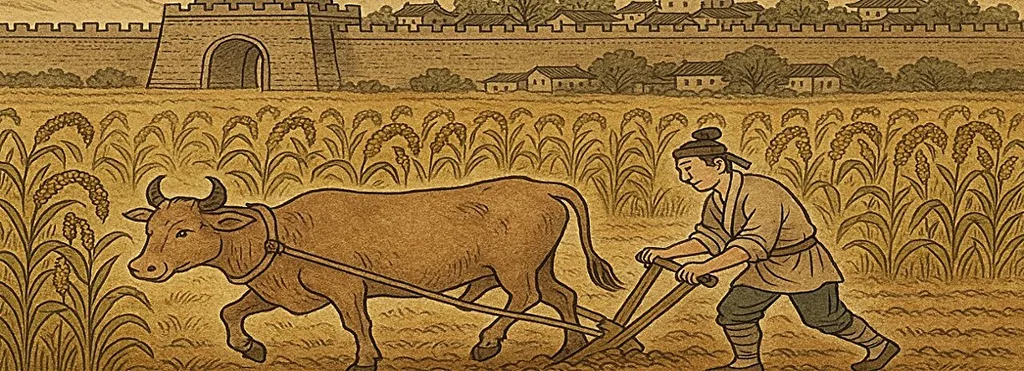
In the heart of China’s agricultural landscape, a groundbreaking study is reshaping our understanding of foxtail millet cultivation, offering promising insights for farmers and breeders alike. The research, led by Ke Ma from the College of Agronomy and Biotechnology at China Agricultural University, delves into the intricate relationship between irrigation, fertilization, and the yield of traditional and modern foxtail millet varieties. Published in the esteemed journal *Agricultural Water Management*, the findings could significantly impact the agriculture sector, particularly in arid and semi-arid regions.
The study compared the traditional cultivar Jingu 6 with the modern cultivar Changsheng 13 under varying water and fertilizer conditions. The results revealed a stark contrast in the behavior of these two varieties. The traditional cultivar, Jingu 6, exhibited a low but stable yield, showing minimal inter-annual variation and low sensitivity to water and fertilizer inputs. “This cultivar is a survivor,” Ma remarked, highlighting its ability to maintain yield primarily through optimized photoprotective mechanisms and pre-flowering dry matter allocation, even under rainfed conditions.
In contrast, the modern cultivar Changsheng 13 displayed high yield potential but poor stability. Its yield increased significantly under high water and high fertilizer inputs, with improvements ranging from 39.09% to a remarkable 272.42%. “This variety thrives when given the right conditions,” Ma explained, noting that its high yield is achieved through improved plant architecture, enhanced photosynthetic efficiency, and strengthened source-sink coordination.
The implications for the agriculture sector are profound. Traditional cultivars like Jingu 6 are well-suited for rainfed dryland agriculture, offering a reliable option for farmers in regions with limited water resources. On the other hand, modern cultivars like Changsheng 13 require reliable irrigation but promise high yields when conditions are optimal. This duality opens up new avenues for crop management and breeding strategies.
Looking ahead, the study suggests that future breeding programs should aim to integrate the water-saving and stress-tolerance traits of traditional cultivars with the high-yield potential of modern cultivars. “By combining the best of both worlds, we can develop water-efficient and high-yielding hybrids,” Ma envisioned, underscoring the importance of building a climate-resilient foxtail millet production system.
The research not only sheds light on the mechanisms underlying yield formation in foxtail millet but also provides a roadmap for sustainable agriculture in the face of climate change. As the world grapples with water scarcity and erratic weather patterns, the insights from this study could be instrumental in shaping the future of crop cultivation, ensuring food security for generations to come.