
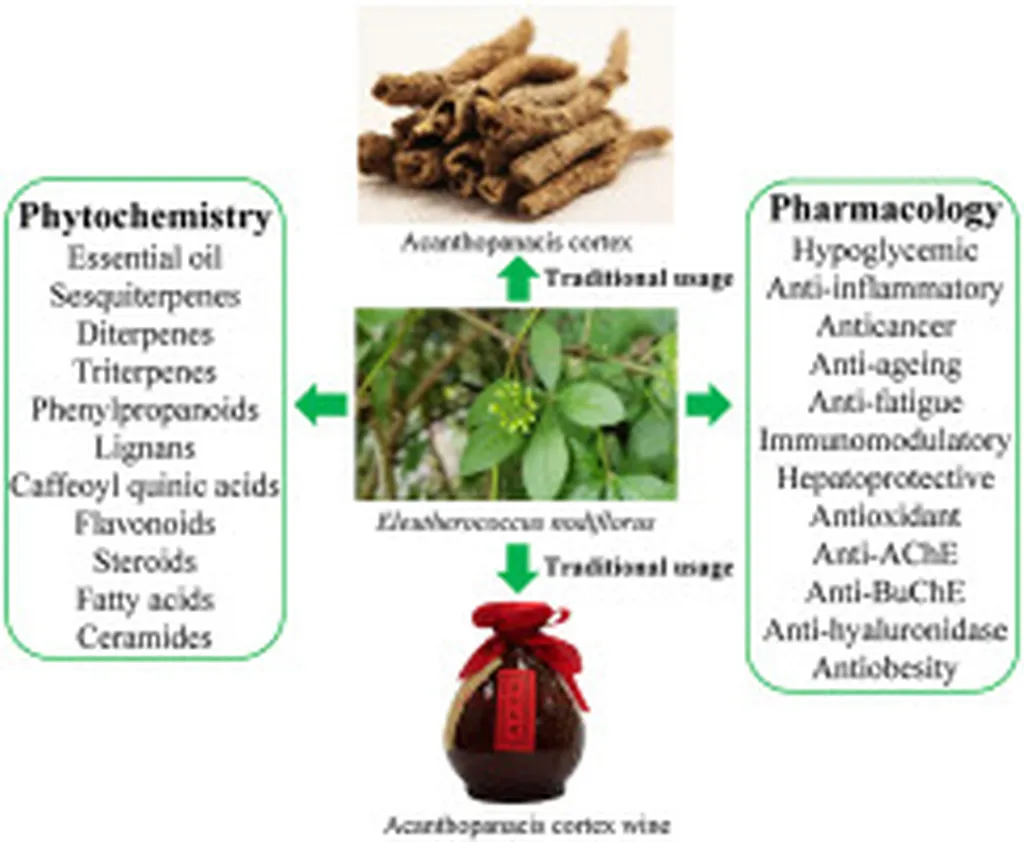
In the quest for natural anti-inflammatory agents, researchers have turned their attention to a compound found in Eleutherococcus sessiliflorus, a plant known for its medicinal properties. A recent study published in the *Journal of Functional Foods* has shed light on the potential of cyanidin-3-O-lathyroside, an anthocyanin derived from this plant, to combat inflammation at the cellular level.
The study, led by Amylin Jay Eunice Cabuloy from the Division of Animal Science at Chonnam National University in the Republic of Korea, investigated the anti-inflammatory effects of cyanidin-3-O-lathyroside in lipopolysaccharide (LPS)-stimulated RAW 264.7 macrophages. The researchers found that treatment with cyanidin-3-O-lathyroside consistently reduced macrophage activation and the expression of pro-inflammatory cytokines such as tumor necrosis factor alpha (TNF-α), interleukin-1 beta (IL-1β), and interleukin-6 (IL-6). Additionally, the compound inhibited the activity of inflammatory mediators like inducible nitric oxide synthase (iNOS) and cyclooxygenase-2 (COX-2).
One of the most significant findings was the compound’s ability to interfere with the nuclear factor-kappa B (NF-κB) pathway, a critical regulator of inflammatory responses. “The phosphorylation of IκB-α and the nuclear translocation of p65 were effectively inhibited by cyanidin-3-O-lathyroside at higher concentrations,” noted Cabuloy. This dose-dependent suppression of LPS-induced inflammation suggests that cyanidin-3-O-lathyroside could be a promising natural anti-inflammatory agent.
The implications for the agriculture sector are substantial. Eleutherococcus sessiliflorus is already cultivated for its medicinal properties, but the identification of cyanidin-3-O-lathyroside as a potent anti-inflammatory compound could enhance its commercial value. Farmers and agricultural businesses may find new opportunities in cultivating this plant for its bioactive compounds, which could be used in the development of functional foods, dietary supplements, and even pharmaceuticals.
Moreover, the study highlights the potential for further research into anthocyanins and other plant-derived compounds. As consumer demand for natural and effective anti-inflammatory treatments grows, the agricultural sector could play a pivotal role in meeting this need. “This research opens up new avenues for exploring the therapeutic potential of plant-derived compounds,” said Cabuloy. “It also underscores the importance of sustainable agriculture practices that can support the cultivation of medicinal plants.”
The findings from this study not only advance our understanding of the anti-inflammatory properties of cyanidin-3-O-lathyroside but also pave the way for future developments in the field of agritech and functional foods. As researchers continue to uncover the benefits of natural compounds, the agriculture sector stands to gain from the growing interest in plant-based solutions for health and wellness.