
In the ongoing debate surrounding genetically modified (GM) crops, a recent study published in *GM Crops & Food* offers a nuanced perspective on their environmental impact, particularly focusing on the gut bacterial diversity of Eisenia fetida, a common earthworm species. The research, led by Ye-Jin Jang from the Department of Agricultural Biotechnology at the National Institute of Agricultural Sciences in Korea, sheds light on how herbicide-resistant GM rapeseed compares to its non-GM counterpart in terms of ecological safety.
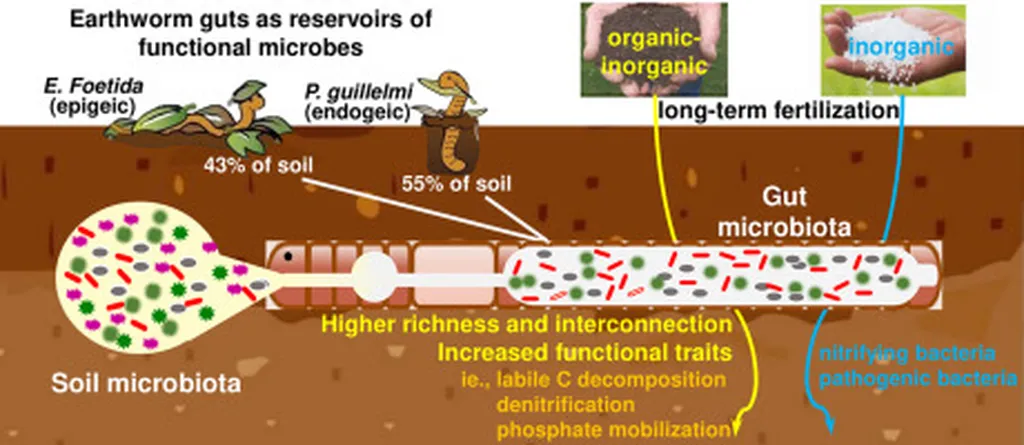
The study employed 16S rRNA amplicon sequencing to analyze the gut bacterial communities of E. fetida fed either GM or non-GM rapeseed. The findings revealed no significant differences in the composition or diversity of gut bacteria between the two groups. “Our data suggest that the type of rapeseed—whether GM or non-GM—does not substantially alter the gut microbiota of earthworms,” Jang explained. This is a crucial insight, as the gut microbiota plays a pivotal role in the health and functioning of these soil-dwelling organisms, which are integral to soil health and nutrient cycling.
One of the most compelling aspects of the study was its exploration of horizontal gene transfer (HGT), a process where genetic material is transferred from one organism to another in a manner other than through traditional reproduction. The researchers conducted polymerase chain reaction (PCR) analysis to detect any potential transfer of the phosphinothricin acetyltransferase gene from GM rapeseed to the gut microbes or the earthworms themselves. The results were unequivocal: no evidence of HGT was found. “This absence of gene transfer is reassuring and underscores the safety of GM rapeseed in this context,” Jang noted.
The implications of these findings are significant for the agriculture sector. As the global demand for sustainable and efficient crop production continues to grow, the adoption of GM crops offers a promising avenue for farmers. The study’s results suggest that herbicide-resistant GM rapeseed can be integrated into agricultural practices without adversely affecting soil health, as evidenced by the stable gut bacterial diversity in earthworms. This could bolster confidence among farmers and consumers alike, potentially accelerating the commercial adoption of GM crops.
Moreover, the research highlights the importance of rigorous scientific evaluation in assessing the environmental impact of GM crops. By providing a comprehensive analysis of gut bacterial diversity and HGT, the study sets a precedent for future research in this field. As Jang pointed out, “Understanding the ecological interactions of GM crops is essential for their responsible and sustainable use.”
In the broader context, this study contributes to the ongoing dialogue about the safety and efficacy of GM crops. It underscores the need for continued research to address any potential risks and ensures that the benefits of genetic modification are harnessed responsibly. For the agriculture sector, this means not only improved crop yields and pest resistance but also the preservation of vital ecological processes, such as those mediated by earthworms.
As the scientific community continues to delve into the complexities of GM crops, studies like this one provide valuable insights that can shape future developments. By demonstrating the negligible impact of GM rapeseed on gut bacterial diversity and the absence of horizontal gene transfer, the research paves the way for more informed decision-making and the sustainable integration of GM crops into global agriculture.