
In the heart of Italy, researchers are unraveling the intricate dance between water, nutrients, and grapevines, with potential implications for vineyards worldwide. A recent study published in *Environmental and Experimental Botany* sheds light on how water deficit and nitrogen (N) and potassium (K) fertilization interact to influence grapevine physiology, offering insights that could revolutionize viticultural practices.
The study, led by Gabriella Vinci from the University of Udine, focused on two prominent grapevine cultivars, ‘Cabernet Sauvignon’ and ‘Grenache’. These cultivars were subjected to varying levels of water availability and nutrient fertilization, revealing a complex interplay that varies not only with the type of grapevine but also with its developmental stage.
“Water and nutrient availability strongly influence grapevine yield and wine quality,” Vinci explains. “While the single effects of water deficit and nutrient deficiency have been extensively studied, their interaction remains poorly understood.”
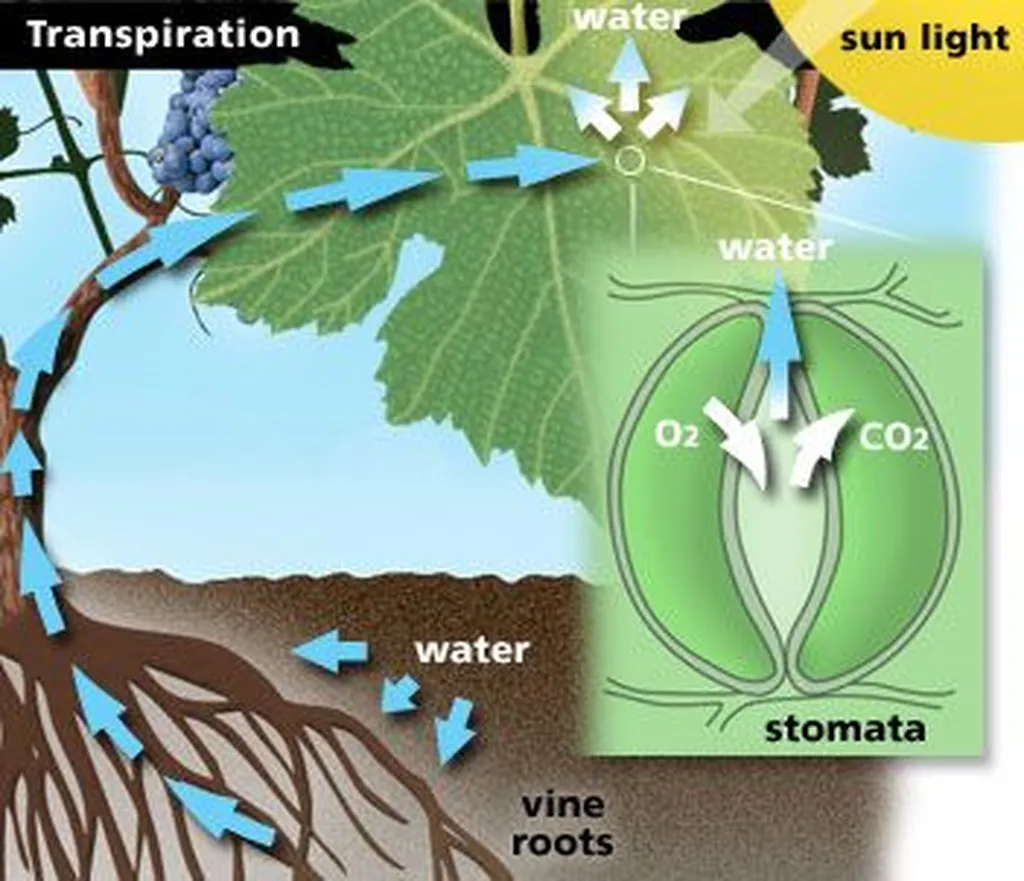
The research found that water deficit significantly reduced plant growth, with ‘Grenache’ exhibiting a slower growth rate than ‘Cabernet Sauvignon’. At flowering, water treatment was the dominant factor modulating plant response. Water deficit reduced stomatal conductance, while enhancing accumulation of several nutrients. However, as the season progressed, the influence of N and K fertilization became more pronounced.
For ‘Cabernet Sauvignon’, the ionomic composition of leaves was responsive to N and K from veraison, the onset of ripening. Interestingly, this behavior aligns with a reduction in stomatal conductance caused by high N rather than water deficit. In contrast, the ionomic composition of ‘Grenache’ was affected by N and K only at maturity, while stomatal conductance was consistently modulated by water availability throughout the season.
The study also highlighted that the effects of K on leaf ionomic composition were more pronounced under high N. This nuanced understanding of how different factors interact could pave the way for more tailored fertilization strategies, enhancing both yield and quality in vineyards.
The commercial implications of this research are substantial. As vineyards worldwide grapple with the challenges of climate change and water scarcity, understanding how to optimize nutrient management can lead to more sustainable and resilient viticultural practices. By fine-tuning fertilization strategies to the specific needs of different grapevine cultivars and their developmental stages, growers can potentially improve both the quantity and quality of their harvests.
“This research underscores the importance of both water and chemical inputs, whose effects vary with cultivar and developmental stage,” Vinci notes. “Results will contribute to the improvement of viticultural sustainability by developing optimized fertilization strategies tailored to plant requirements under specific environmental conditions.”
As the agricultural sector continues to evolve, studies like this one are crucial in shaping future developments. By providing a deeper understanding of the complex interactions between water, nutrients, and plants, researchers are equipping growers with the tools they need to adapt and thrive in an ever-changing environment.
Published in *Environmental and Experimental Botany* and led by Gabriella Vinci from the Department of Agricultural, Food, Environmental and Animal Sciences at the University of Udine, this research offers a glimpse into the future of viticulture, where precision and sustainability go hand in hand.