
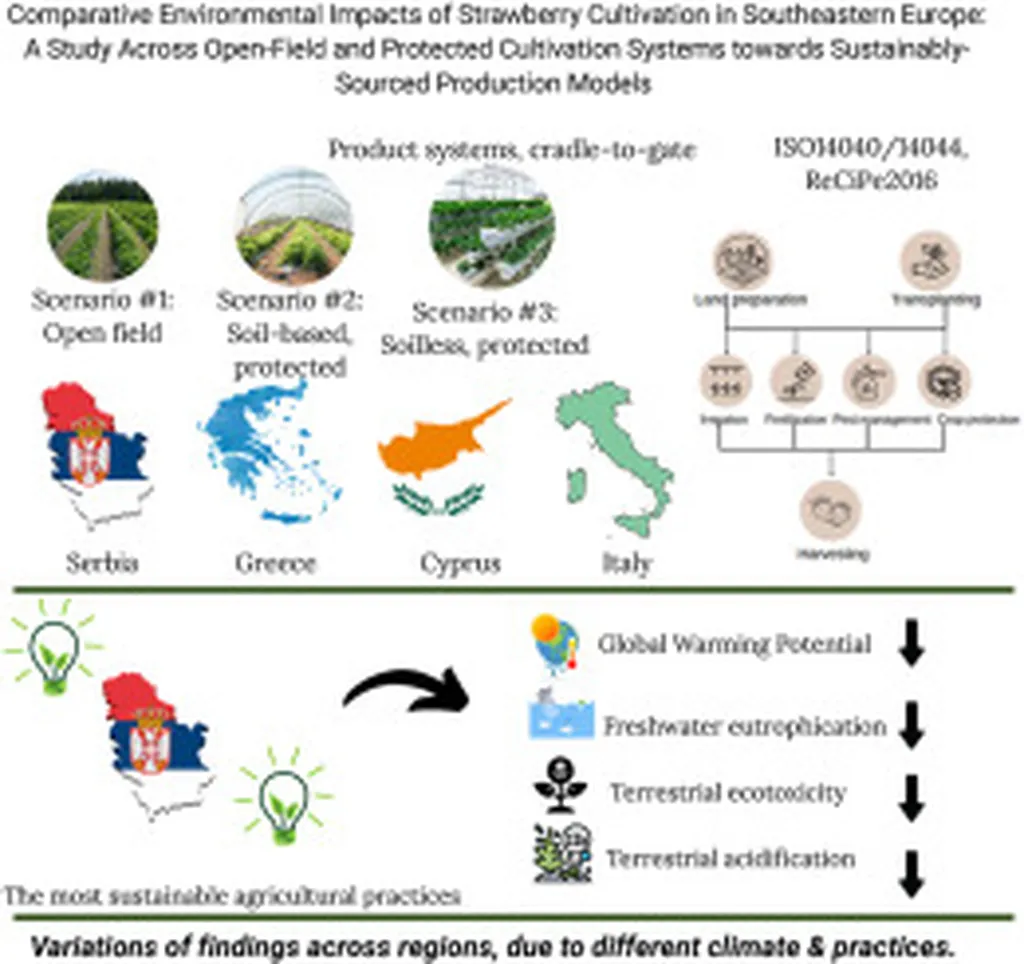
In the heart of Southeastern Europe, a silent battle is being waged—not against pests or diseases, but against the environmental impacts of strawberry cultivation. A recent study published in the *Journal of Agriculture and Food Research* has shed light on the climate change impacts of different strawberry cultivation systems, offering valuable insights for farmers, policymakers, and agribusinesses alike.
The study, led by Georgia Frakolaki from the National Technical University of Athens, compared three cultivation systems—open-field, protected soil-based, and protected soilless—across four countries: Serbia, Greece, Cyprus, and Italy. Using Life Cycle Assessment (LCA) methodology, the research team evaluated the environmental footprint of each system, from land preparation to harvest.
The findings reveal a complex landscape of trade-offs. Cyprus, for instance, exhibited the highest global warming potential, primarily due to excessive fertilizer use in soilless cultivation. “The high global warming potential in Cyprus is largely attributed to the intensive use of fertilizers in soilless systems,” Frakolaki explained. “This highlights the need for more sustainable nutrient management practices in these regions.”
On the other hand, Serbia showed the lowest impact, reflecting more sustainable agricultural practices. The study also found that open-field cultivation in Cyprus and protected soilless cultivation in Serbia had the highest water consumption, driven by climate conditions and plant density differences.
These results underscore the importance of region-specific strategies for optimizing sustainability in strawberry production. “Our findings illustrate that no single cultivation system performs best across all impact categories,” Frakolaki noted. “Instead, each system’s advantages come at a cost in another environmental dimension.”
The commercial implications of this research are significant. For farmers, the study provides a roadmap for reducing environmental impacts while maintaining productivity. For agribusinesses, it offers insights into sustainable practices that can enhance brand reputation and meet consumer demand for eco-friendly products.
The study also highlights the need for further research and innovation in sustainable agriculture. As the global population grows and climate change intensifies, the demand for sustainable food production will only increase. This research serves as a call to action for the agriculture sector to adopt more sustainable practices and invest in innovative technologies.
In the words of Frakolaki, “The future of strawberry cultivation lies in adopting region-specific strategies that balance environmental sustainability with economic viability.” As the agriculture sector grapples with the challenges of climate change, this research offers a beacon of hope and a roadmap for a more sustainable future.
Published in the *Journal of Agriculture and Food Research*, this study led by Georgia Frakolaki from the National Technical University of Athens provides a crucial step forward in our understanding of sustainable strawberry cultivation. As the agriculture sector continues to evolve, the insights from this research will undoubtedly shape future developments in the field.