
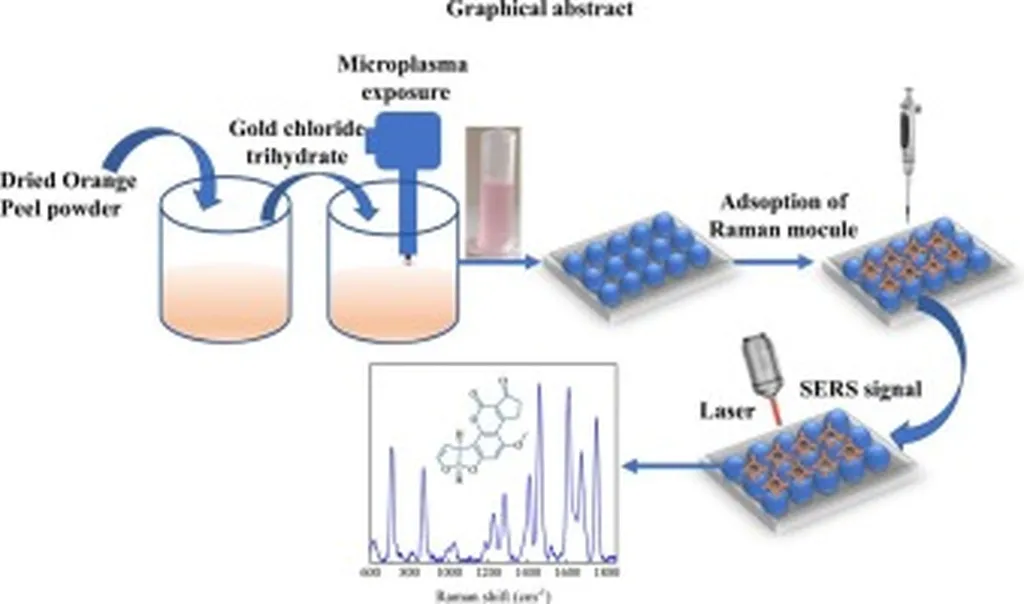
In the ever-evolving landscape of food safety, a groundbreaking systematic review published in *Nanotechnology, Science and Applications* is set to revolutionize how we detect one of the most insidious contaminants in our food supply: aflatoxins. Led by Temitope R. Fagbohun from the University of Johannesburg’s Department of Biotechnology and Food Technology, the research delves into the transformative potential of nanotechnology in detecting these harmful toxins, offering a beacon of hope for farmers, food processors, and consumers alike.
Aflatoxins, produced by certain molds, are a significant threat to global food security. These toxins can contaminate staple crops like maize, peanuts, and tree nuts, posing severe health risks, including liver damage and even cancer. Traditional detection methods, while accurate, are often cumbersome, time-consuming, and require sophisticated equipment and skilled personnel. This limitation has long been a bottleneck in ensuring food safety, particularly in resource-limited settings.
Enter nanotechnology. The systematic review, conducted in accordance with the Joanna Briggs Institute (JBI) guidelines and reported following the PRISMA framework, scrutinized 38 peer-reviewed studies published between 2010 and 2023. The findings are nothing short of remarkable. Nanoparticles, particularly gold nanoparticles (AuNPs), have emerged as a game-changer in the detection of aflatoxins. “The high surface-to-volume ratio, tunable surface chemistry, and exceptional optical properties of AuNPs enhance assay sensitivity and signal transduction in immunosensing platforms,” explains Fagbohun. This translates to faster, more accurate, and potentially more cost-effective detection methods.
One of the standout findings was the performance of gold–silica core–shell nanoparticle-based assays, which achieved an astonishing limit of detection (LOD) for Aflatoxin B1 (AFB1) of just 0.24 pg/mL. Other nanomaterials, including carbon-based nanostructures and polymeric nanoparticles, also showed robust analytical performance, with LODs ranging from 0.5 pg/mL to 2.7 ng/mL, depending on the food matrix and assay design.
The commercial implications for the agriculture sector are profound. Farmers and food processors could soon have access to portable, field-deployable diagnostic tools that can quickly and accurately detect aflatoxin contamination. This would not only enhance food safety but also reduce economic losses due to contaminated crops. “The potential for rapid, highly sensitive, and field-deployable food safety diagnostic testing is immense,” says Fagbohun. “It could transform how we monitor and ensure the safety of our food supply.”
However, the journey from laboratory research to routine food safety surveillance is not without its challenges. Issues related to scalability, reproducibility, standardization, and regulatory approval remain critical hurdles. Addressing these barriers will be essential for translating nanotechnology-based aflatoxin detection platforms into practical, widely adopted solutions.
As we look to the future, the research published in *Nanotechnology, Science and Applications* by lead author Fagbohun and his team from the Biotechnology and Food Technology department at the University of Johannesburg offers a glimpse into a world where advanced nanotechnology plays a pivotal role in safeguarding our food supply. The potential is immense, and the stakes are high. The question now is not whether nanotechnology will revolutionize food safety, but how quickly we can overcome the remaining challenges to make this vision a reality.