
In the quest to enhance soil health and bolster agricultural productivity, a recent study published in *Ecotoxicology and Environmental Safety* offers promising insights into the effects of organic amendments on soil organic carbon content and molecular diversity at the aggregate level. Led by Liwen Lin from the State Key Lab of Biocontrol at Sun Yat-sen University, the research delves into the intricate world of soil organic matter (SOM), a critical component for agroecosystem functions.
The study explored five short-term fertilization regimes in a vegetable field, comparing stable amendments like biochar with unstable ones such as manure and food waste compost (FWC). The treatments varied in their composition, with biochar consistently present alongside different ratios of manure and FWC. The goal was to understand how these amendments influence the chemical composition of different SOM fractions within soil aggregates.
One of the key findings was that the proportion of macroaggregates and aggregate stability increased with the substitution of FWC for manure. This is significant for the agriculture sector, as soil structure is a cornerstone of healthy, productive farmland. “The enhancements in soil structure observed with the substitution of FWC for manure suggest that higher-quality organic fertilizers can play a pivotal role in improving soil health,” noted Liwen Lin, the lead author of the study.
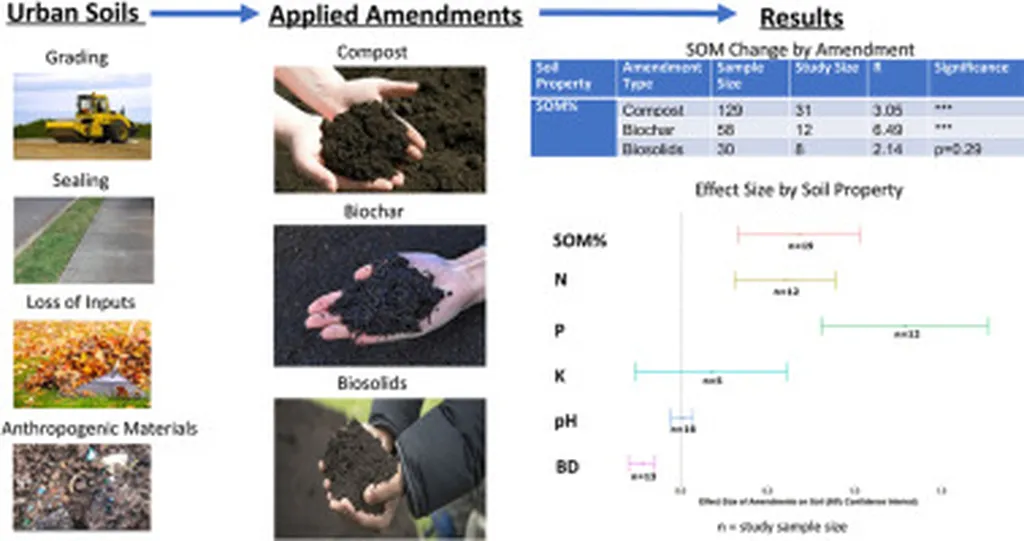
Biochar, known for its stable carbon content, was found to enhance the light fraction (LF) proportion and the soil organic carbon (SOC) content in both macro- and microaggregates. However, this enhancement was not further affected by the substitution of FWC for manure. Interestingly, biochar reduced the molecular diversity of LF SOM, but this reduction could be offset by the FWC substitution. This interplay between different organic amendments highlights the complexity of soil management and the potential for tailored approaches to optimize soil health.
The study also revealed that the effects of organic amendments were most pronounced in the LF of macroaggregates. This finding underscores the importance of understanding the molecular composition of SOM at different aggregate levels, as it can provide valuable insights into the long-term benefits of various fertilization strategies.
For the agriculture sector, these findings hold significant commercial implications. The co-application of biochar and higher-quality organic fertilizers like FWC can lead to improved soil structure, increased SOC content, and enhanced molecular diversity. This can translate to better water retention, nutrient availability, and overall crop productivity, ultimately benefiting farmers and the broader agricultural industry.
As the world grapples with the challenges of climate change and the need for sustainable agricultural practices, research like this is crucial. It not only advances our scientific understanding but also paves the way for practical applications that can drive innovation in the field. The study by Liwen Lin and colleagues, published in *Ecotoxicology and Environmental Safety*, is a testament to the power of interdisciplinary research in addressing real-world problems.
In the future, we can expect to see more studies exploring the intricate relationships between different organic amendments and soil health. This research could shape the development of new fertilization strategies and soil management practices, ultimately contributing to more sustainable and productive agricultural systems. As the agriculture sector continues to evolve, the insights gained from such studies will be invaluable in guiding the way forward.