
In the quest for sustainable agriculture, a recent study published in *Frontiers in Microbiology* has shed light on a promising approach to enhance soil fertility and microbial diversity in peanut intercropping systems. The research, led by Haining Wu from the Cash Crops Research Institute at the Guangxi Academy of Agricultural Sciences, explores the combined application of chemical and microbial fertilizers, offering a potential solution to the critical bottleneck restricting the peanut industry’s sustainable development.
The study evaluated six different fertilization treatments on the chemical properties and microbial communities of the rhizosphere soil of intercropped peanuts. The findings revealed that the combined application of chemical and microbial fertilizers significantly increased soil organic matter content and alleviated soil acidification. This is a game-changer for farmers who have long struggled with the decline in soil microecological balance caused by continuous cropping obstacles and excessive use of chemical fertilizers.
One of the most striking results was the significant increase in microbial diversity under the combined fertilization treatment. “The T4 treatment, which involved 80% chemical fertilizer combined with microbial fertilizer, had the highest Shannon diversity,” explained Wu. “This demonstrates its effectiveness in reversing the suppressive effect of chemical fertilizer alone on microbial diversity.”
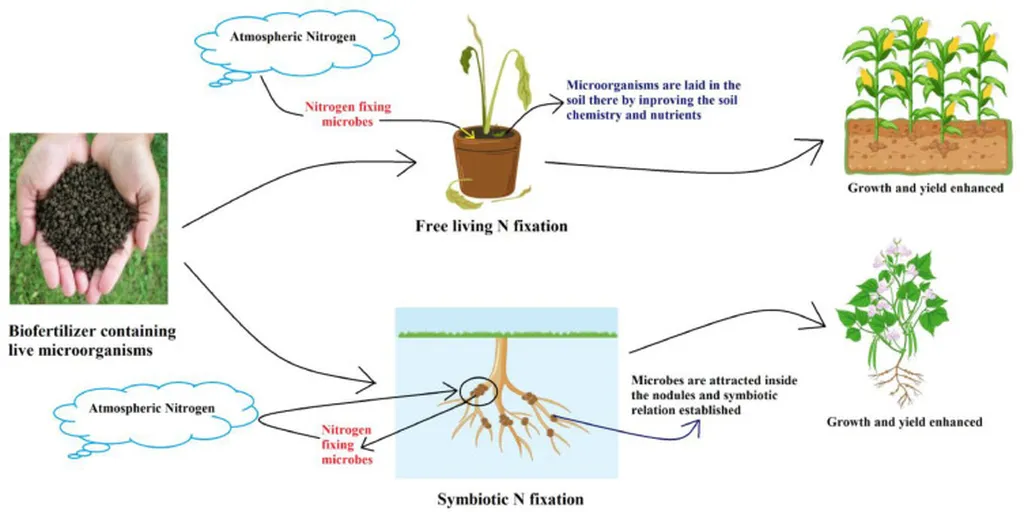
The study also found that the combined application of chemical and microbial fertilizers significantly altered the microbial community structure, enriching beneficial bacteria like rhizobia. This reshaping of the microbial community is crucial for improving soil health and nutrient usability, ultimately enhancing crop yield.
The commercial implications of this research are substantial. By optimizing the soil microenvironment, farmers can expect improved soil fertility, increased organic matter, and better-regulated pH levels. This not only leads to healthier crops but also contributes to more sustainable agricultural practices. As the global demand for peanuts continues to rise, the need for efficient and eco-friendly farming methods becomes ever more pressing.
The study’s findings provide a theoretical basis for optimizing fertilization strategies in peanut intercropping systems. It opens up new avenues for future research and development in the field of agritech, particularly in the area of microbial fertilizers. As we move towards a more sustainable future, such innovations will be key to ensuring food security and environmental stewardship.
The research led by Haining Wu from the Cash Crops Research Institute at the Guangxi Academy of Agricultural Sciences, published in *Frontiers in Microbiology*, offers a glimpse into the future of agriculture, where technology and nature work hand in hand to create a more sustainable and productive farming landscape.