
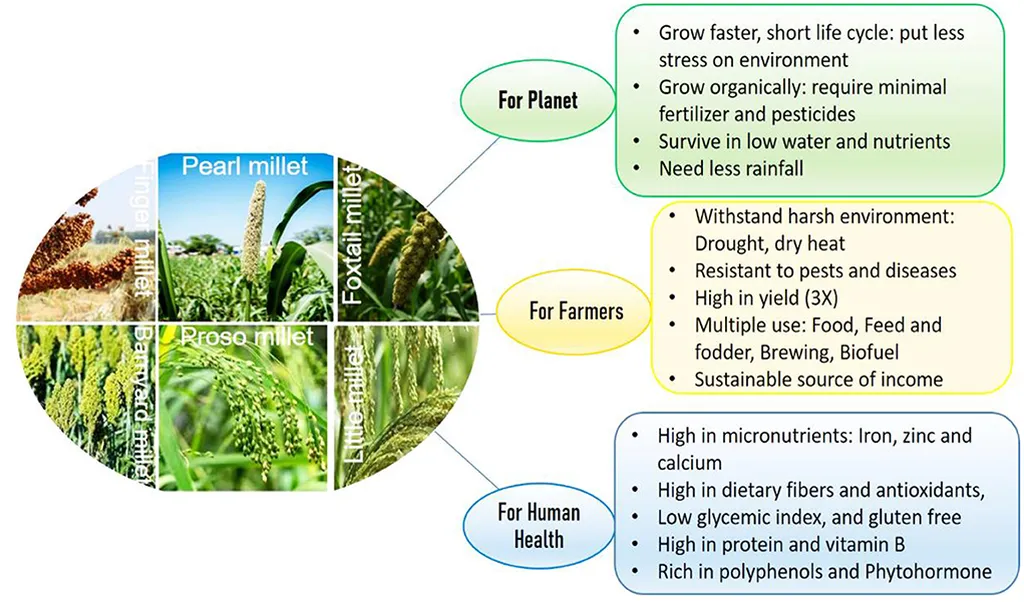
In the quest for sustainable and resilient agriculture, millets have emerged as a promising solution, thanks to their ability to thrive in diverse environments and their rich nutritional profile. Now, a new review published in *Cogent Food & Agriculture* sheds light on how Plant Growth Promoting Microorganisms (PGPM) and nanoparticles could revolutionize millet cultivation, offering a dual approach to enhance growth and improve crop yields.
The study, led by Anitha Sakthivel from the Translational Plant Research Laboratory at Bharathiar University in India, explores the intricate roles of PGPM and nanoparticles in millet agriculture. PGPM, including plant growth-promoting rhizobacteria (PGPR), are known to enhance nutrient uptake, improve soil health, and boost plant resilience against stress factors. “The diversity of PGPM species associated with millets is vast, and understanding this diversity is crucial for optimizing their performance across different agroecosystems,” Sakthivel notes.
Nanoparticles, with their unique physicochemical properties, offer another layer of innovation. They can enhance nutrient delivery, improve soil health, and mitigate stress factors affecting millet crops. “Nanoparticles promote sustainable farming practices by reducing the environmental footprint associated with chemical inputs,” Sakthivel explains. This dual approach of combining PGPM and nanoparticles could be a game-changer for millet cultivation, addressing both environmental challenges and the growing demand for food security.
The commercial implications of this research are significant. As the global population continues to rise, the demand for resilient and nutritious crops like millets is expected to grow. By leveraging PGPM and nanoparticles, farmers could achieve higher yields and better crop quality, ultimately boosting their income and contributing to food security. Moreover, the reduced environmental impact of these practices could open up new markets for eco-friendly and sustainably produced millets.
Looking ahead, this research could shape future developments in the field of agritech. The integration of PGPM and nanoparticles into mainstream agricultural practices could lead to more sustainable and resilient farming systems. It could also pave the way for further research into the use of biotechnology and nanotechnology in agriculture, opening up new avenues for innovation and growth.
In conclusion, the review by Sakthivel and her team highlights the potential of PGPM and nanoparticles in millet agriculture. By understanding and harnessing these tools, we can take a significant step towards sustainable and resilient agriculture, addressing the dual pressures of environmental change and population growth. As the world grapples with these challenges, the insights from this research offer a beacon of hope and a path forward.