
In the face of climate change, drought stress poses a significant threat to global agriculture, particularly for crops like Brassica napus, or rapeseed, a vital oilseed crop. A recent study published in *Industrial Crops and Products* sheds light on the DREB gene family, offering promising avenues for enhancing drought tolerance in rapeseed. Led by Jin Tang from the College of Agronomy and Biotechnology at Southwest University in China, the research identifies a key gene, BnaA6.TINY, that could revolutionize how we breed crops for resilience.
The study systematically identified 128 DREB genes in the B. napus genome, classifying them into six subfamilies based on their structural characteristics and evolutionary relationships. “This comprehensive overview provides a foundation for understanding the role of DREB genes in rapeseed’s response to abiotic stresses,” Tang explained. The research revealed that these genes have undergone numerous segmental duplication events and are subject to purifying selection, indicating their critical role in the plant’s survival under stress conditions.
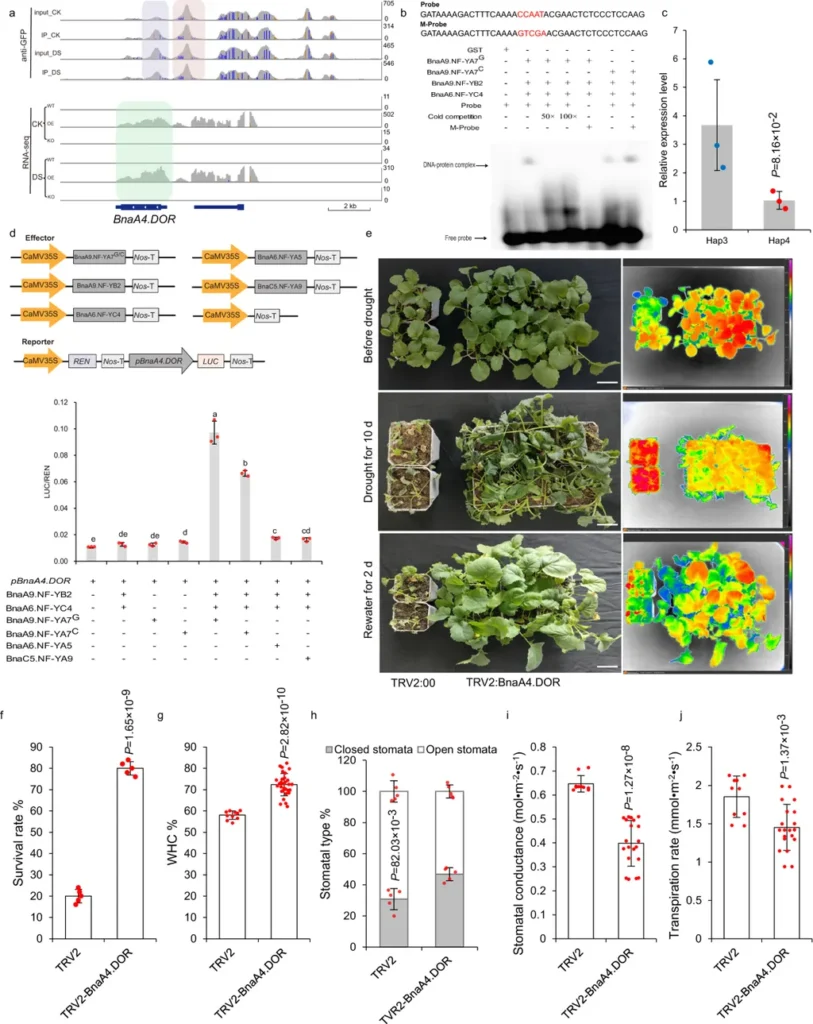
One gene, BnaA6.TINY (BnaDREB34), stood out due to its constitutive expression in various tissues and significant upregulation under drought stress. Transient expression assays showed that BnaA6.TINY is localized in the nucleus and exhibits robust transcriptional activation activity in yeast cells. When overexpressed in both Arabidopsis and B. napus, this gene significantly increased drought tolerance, accompanied by increased proline accumulation and reduced levels of reactive oxygen species (ROS).
The study also demonstrated that BnaA6.TINY specifically binds to the DRE (dehydration-responsive element) motif in the BnaA9.PP2C58 promoter, activating its expression and promoting stomatal closure. This mechanism enhances drought tolerance by reducing water loss. “The identification of BnaA6.TINY as a key regulator of drought stress responses opens up new possibilities for molecular breeding,” Tang noted. “This could lead to the development of rapeseed varieties that are more resilient to drought, ensuring food security and economic stability for farmers.”
The commercial implications of this research are substantial. With droughts becoming more frequent and severe due to climate change, crops with enhanced drought tolerance could become a cornerstone of sustainable agriculture. Farmers would benefit from higher yields and more reliable harvests, while the agricultural industry could see increased profitability and reduced environmental impact.
Moreover, the insights gained from this study could extend beyond rapeseed. The DREB gene family is known to play crucial roles in conferring resistance to various abiotic stresses in numerous crop species. As such, the findings could pave the way for similar advancements in other crops, further bolstering global food security.
In summary, this research not only provides a comprehensive overview of the DREB gene family in B. napus but also identifies BnaA6.TINY as a promising target for enhancing drought tolerance. As climate change continues to pose challenges to agriculture, such breakthroughs are crucial for developing resilient crops and ensuring a sustainable future for the sector. The study, published in *Industrial Crops and Products*, was led by Jin Tang from the College of Agronomy and Biotechnology at Southwest University in China, highlighting the importance of international collaboration and innovation in agricultural research.