
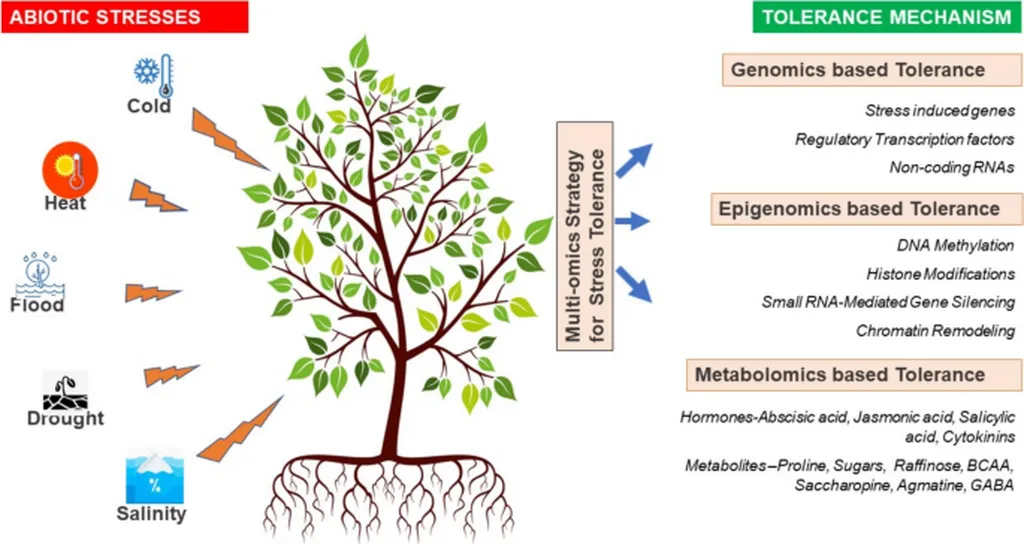
In the ever-evolving landscape of plant biotechnology, a recent study published in *iScience* has shed new light on the genetic mechanisms that could bolster flax’s resilience to environmental stresses. Led by Hang Wang from the Faculty of Agronomy at Jilin Agricultural University and the International Biotechnology Laboratory for Fiber Plants, the research delves into the basic leucine zipper (bZIP) transcription factor family, a group of genes known to play pivotal roles in plant growth, development, and stress responses.
Flax, a versatile crop with applications ranging from textiles to food and industrial products, faces significant challenges from abiotic stresses such as cold, drought, and salt. Understanding how bZIP genes contribute to stress tolerance could pave the way for developing more resilient flax varieties, benefiting farmers and the agricultural sector at large.
The study identified 99 bZIP genes from the telomere-to-telomere (T2T) genome and 92 from the Longya10 reference genome, forming 12 conserved subfamilies. These genes contain promoter cis-elements related to phytohormone signaling and abiotic stress responses, indicating their potential role in enhancing flax’s ability to withstand harsh environmental conditions.
“Our findings suggest that large-scale duplication events have driven the expansion of the bZIP family in flax,” Wang explained. “This genetic diversity could be key to unlocking new traits that improve the crop’s resilience to stress.”
The research also identified miRNA-target interactions, with Lus-miR398 emerging as a key regulator of LubZIP transcription factors. Transcriptomic data revealed that most bZIP genes were highly expressed in leaves, while RT-qPCR analysis showed that LubZIP15 and LubZIP45 were strongly induced by cold, drought, and salt stresses.
The implications of this research are far-reaching for the agriculture sector. By understanding the genetic basis of stress tolerance in flax, breeders and biotechnologists can develop new varieties that are better equipped to handle environmental challenges. This could lead to increased yields, improved crop quality, and greater economic returns for farmers.
“These findings provide a comprehensive genome-wide view of the flax bZIP family and their potential roles in abiotic stress tolerance,” Wang noted. “This knowledge could be instrumental in developing strategies to enhance flax’s resilience and adaptability in the face of climate change.”
As the agricultural industry continues to grapple with the impacts of climate change, research like this offers a glimmer of hope. By harnessing the power of genetic diversity and advanced biotechnology, we can pave the way for a more sustainable and resilient future for flax and other crops. The study, published in *iScience*, underscores the importance of continued investment in plant biotechnology research, as it holds the key to unlocking new solutions for the challenges facing modern agriculture.