
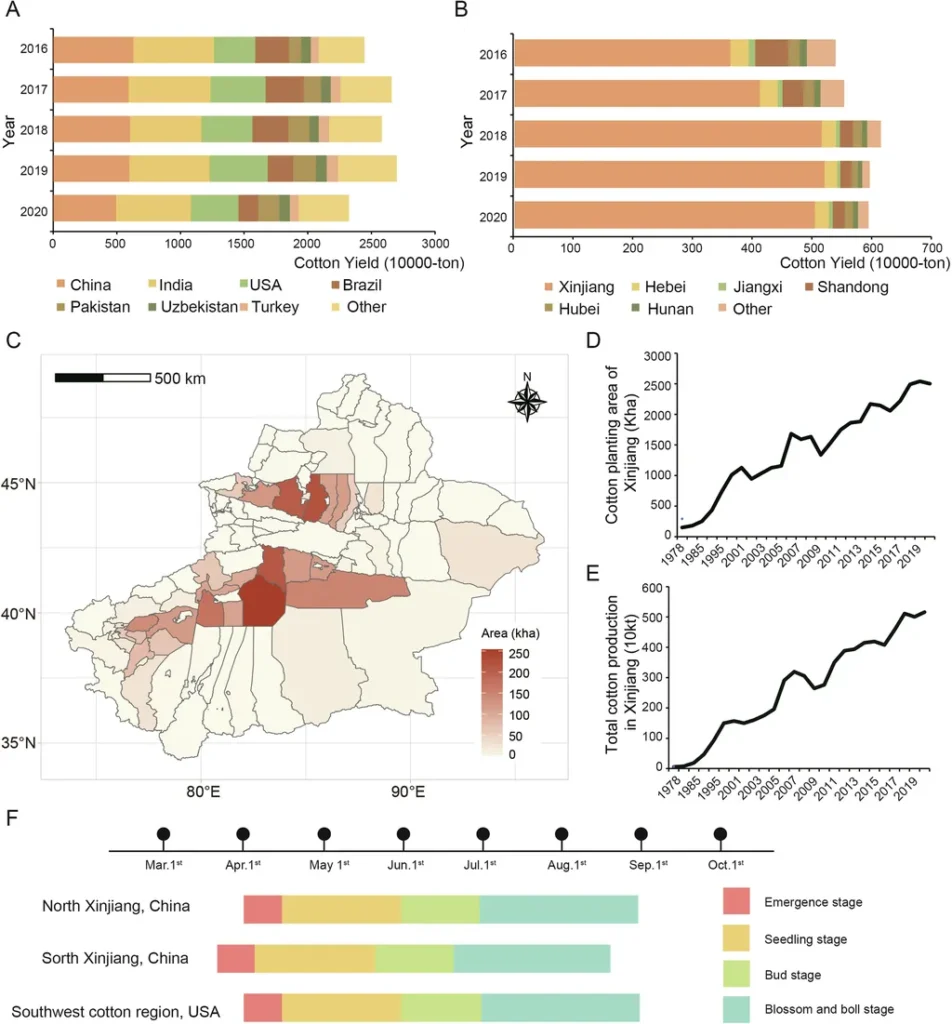
In the vast cotton fields of Xinjiang, China, a groundbreaking study is unraveling the intricate dance between temperature, plant hormones, and defoliation, offering promising insights for the agriculture sector. The research, led by Keke Yu from the Engineering Research Center of Plant Growth Regulator at China Agricultural University, sheds light on how temperature after defoliant application can significantly impact cotton harvest efficiency.
The study, published in *Industrial Crops and Products*, focuses on thidiazuron, a widely used defoliant that enhances fiber quality in machine-harvested cotton. The researchers conducted mixed field and greenhouse experiments, manipulating temperature and defoliant rates to observe their effects on cotton defoliation. They found that higher temperatures after applying thidiazuron dramatically increased the defoliation rate by 58.9% compared to lower temperatures. This improvement was linked to a decrease in leaf water content, auxin content, and break strength, along with an increase in leaf ethylene evolution.
“High temperatures after thidiazuron application promote the formation of cotton abscission zones, which is crucial for efficient defoliation,” explained Yu. The study also identified key transcription factors and potential target genes associated with auxin and ethylene, which play pivotal roles in the defoliation process. These findings could pave the way for developing cotton varieties more sensitive to defoliants and improving harvest aid efficiency.
The commercial implications of this research are substantial. Cotton producers worldwide could benefit from optimized defoliation practices, leading to better fiber quality and higher yields. By understanding the physiological and phytohormonal responses regulated by temperature, farmers can make more informed decisions about when and how to apply defoliants, ultimately enhancing their productivity and profitability.
Moreover, the study’s insights into the genetic regulation of defoliation open new avenues for breeding programs. By identifying genes and transcription factors involved in the process, researchers can develop cotton varieties that respond more predictably to defoliants, reducing the need for multiple applications and minimizing environmental impact.
As the agriculture sector continues to seek sustainable and efficient practices, this research offers a promising step forward. By harnessing the power of temperature and plant hormones, the future of cotton farming looks brighter and more productive than ever.