
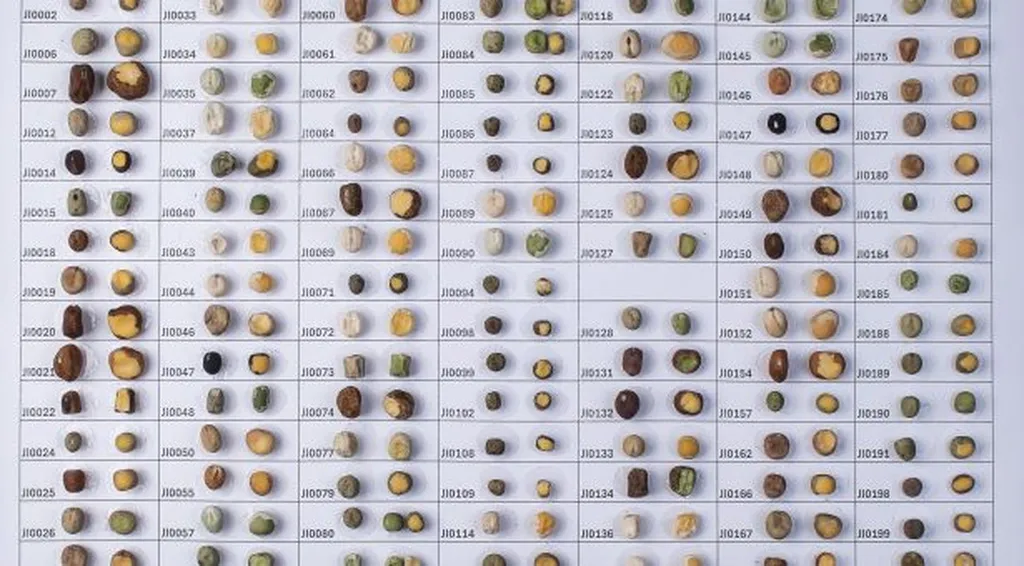
In a groundbreaking study published in *BMC Genomics*, researchers have uncovered significant genetic differences between two subspecies of field pea (*Pisum sativum*), shedding light on their unique traits and potential for agricultural improvement. The study, led by Kiros Tekle of the Institute of Biotechnology at Addis Ababa University, utilized RNA-Seq technology to compare gene expression patterns between *P. sativum* ssp. *abyssinicum* and *P. sativum* ssp. *sativum*, revealing insights that could revolutionize the cultivation and commercialization of these crops.
Field pea is a vital crop for both food and feed industries, but *P. sativum* ssp. *abyssinicum*, which is richer in protein, has largely been overlooked. Cultivated primarily in Ethiopia and Yemen, this subspecies has remained an “orphan crop” despite its nutritional advantages. The research identified 108,612 unigenes, of which 69,512 showed significant matches in major databases. However, only 2,184 matched *P. sativum* sequences, underscoring the scarcity of genomic resources for peas.
The study found 6,704 significantly differentially expressed genes (DEGs) between the two subspecies, with 3,723 down-regulated and 2,980 up-regulated in *ssp. sativum*. These DEGs were annotated into key functional categories such as cellular processes, catalytic activity, and DNA binding. “The differences in gene expression highlight the unique adaptive and metabolic traits of *ssp. abyssinicum*, which could be harnessed to improve crop resilience and yield,” said Kiros Tekle.
Enrichment analysis revealed that stress responses, defense mechanisms, and metabolic processes were prominent biological functions. Major metabolic pathways included purine metabolism, glycolysis/gluconeogenesis, and starch/sucrose metabolism. The study also identified DEGs homologous to major transcription factors involved in stress responses, indicating substantial transcriptional regulation differences between the subspecies.
One of the most promising findings was the distribution of simple sequence repeats (SSRs) and single nucleotide polymorphisms (SNPs) in the transcriptome sequences. The researchers found 10,063 SSRs in *ssp. sativum* and 11,014 in *ssp. abyssinicum*, with trinucleotide repeats predominating. Additionally, 4,402 polymorphic SNP markers were identified, most showing high polymorphism information content. These genomic resources could facilitate the identification of genes underlying desirable traits and aid in genomics-assisted breeding, particularly benefiting the underutilized *ssp. abyssinicum*.
The commercial implications of this research are substantial. By understanding the genetic basis of traits such as protein content and stress resilience, breeders can develop improved varieties of field pea that are better suited to various environmental conditions. This could enhance the crop’s marketability and economic value, particularly in regions where *ssp. abyssinicum* is cultivated.
Moreover, the study’s findings could pave the way for the development of new agricultural technologies and breeding programs aimed at improving the nutritional quality and yield of field pea. As Kiros Tekle noted, “This research provides a foundation for future studies to explore the full potential of *ssp. abyssinicum* and other underutilized crops.”
The study, published in *BMC Genomics* and led by Kiros Tekle of the Institute of Biotechnology at Addis Ababa University, represents a significant step forward in the field of agrigenomics. By uncovering the genetic differences between these two subspecies of field pea, the research offers valuable insights that could shape the future of agriculture and contribute to global food security.