
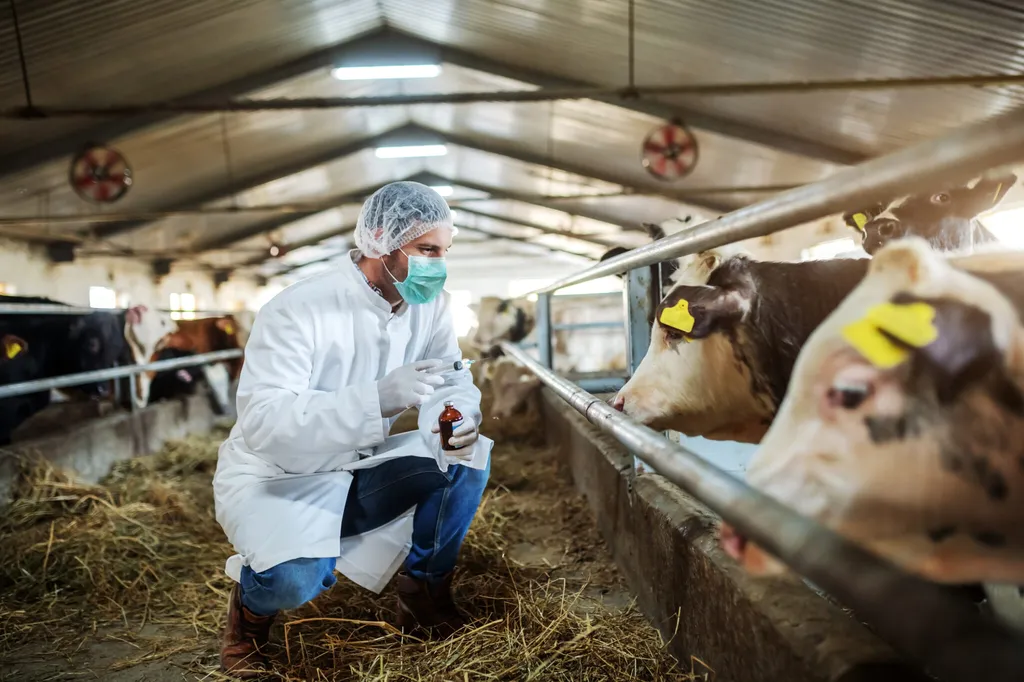
In a significant stride towards safeguarding both animal and public health, researchers have developed an mRNA vaccine that shows promising results in protecting lactating dairy cows against the highly pathogenic H5N1 influenza virus. The study, published in the journal ‘Research’, offers a beacon of hope amidst the ongoing outbreak that has spread to over 1,080 dairy farms across 18 U.S. states, resulting in 41 human infections.
The vaccine, developed by a team led by Huihui Kong from the State Key Laboratory of Animal Disease Control and Prevention at the Harbin Veterinary Research Institute, Chinese Academy of Agricultural Sciences, is based on the hemagglutinin protein of the H5N1 virus. It was encapsulated in lipid nanoparticles to facilitate delivery into the cells. The researchers evaluated the vaccine’s safety, immunogenicity, and protective efficacy in high-yielding lactating dairy cows, a group particularly vulnerable to the virus.
The results were encouraging. The vaccine was well tolerated, with no adverse effects on the health or milk production of the cows. It induced strong antibody responses, and two weeks after the second immunization, all the immunized cattle were fully protected against a high-dose H5N1 virus challenge. Notably, two-thirds of the cattle remained completely protected even at the 19th week after the first vaccination, when their serum antibody levels were very low.
“This is a significant finding,” said Kong. “It suggests that the vaccine can provide robust, lasting protection against H5N1 virus in lactating dairy cows, even when antibody levels are low.”
The implications for the agriculture sector are substantial. The H5N1 outbreak has had a significant impact on dairy farms, leading to decreased milk production and increased costs due to the need for enhanced biosecurity measures. A safe and effective vaccine could help mitigate these impacts, protecting both the health of the cows and the economic viability of the farms.
Moreover, the study provides a foundation for clinical trials, paving the way for the potential development of similar vaccines for other species, including humans. This could be a game-changer in the fight against H5N1 and other highly pathogenic avian influenza viruses.
As we look to the future, this research offers a glimpse of hope. It underscores the potential of mRNA technology in developing effective vaccines against emerging infectious diseases, not just for humans, but for animals as well. It’s a testament to the power of scientific innovation in addressing global health challenges.
In the words of Kong, “This is just the beginning. We are hopeful that our findings will open up new avenues for the development of vaccines against not just H5N1, but other infectious diseases as well.”