
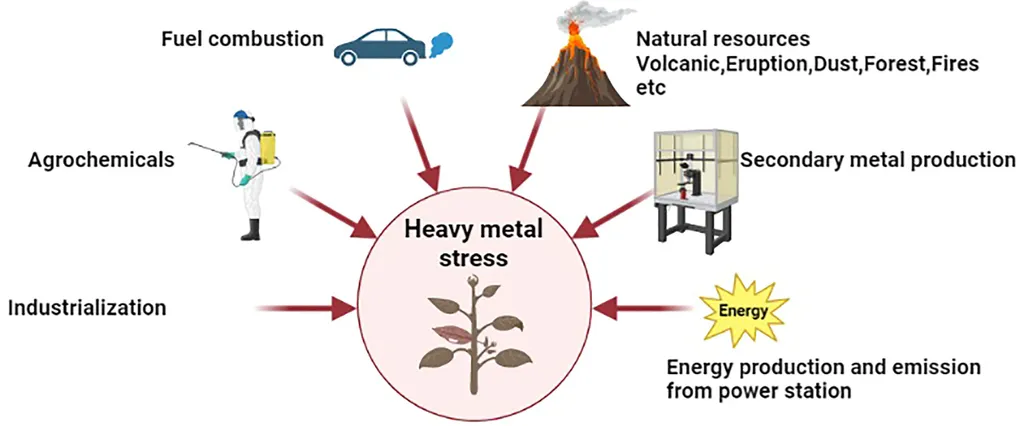
In the heart of Pakistan, researchers are unlocking the genetic secrets of chickpeas, a staple crop that feeds millions worldwide. Their findings could revolutionize how we tackle micronutrient deficiencies and heavy metal stress in plants, offering a beacon of hope for farmers and food security advocates alike.
A team led by Zulkifl Ashraf from the Institute of Plant Breeding and Biotechnology at MNS University of Agriculture in Multan has delved into the genome of chickpeas to understand the role of NRAMP genes. These genes are crucial for the uptake and transport of heavy metals, playing a significant role in plant resilience under stress conditions.
The study, published in the *International Journal of Applied and Experimental Biology*, identified nine NRAMP genes in chickpeas. Through phylogenetic analysis, these genes were grouped into five distinct clades, revealing the evolutionary relationships and potential functions of these genes. “Understanding the genetic basis of heavy metal tolerance in chickpeas is a game-changer,” Ashraf said. “It opens up new avenues for breeding crops that can thrive in challenging environments.”
The research also highlighted that Ca-NRAMP6 has the longest protein sequence, while Ca-NRAMP4 has the highest number of exons and introns. Protein interaction analysis showed that CaNRAMP6 interacts strongly with other proteins, suggesting a central role in the plant’s response to heavy metal stress.
The implications for the agriculture sector are profound. With micronutrient deficiencies, often referred to as “hidden hunger,” affecting billions worldwide, this research could pave the way for developing chickpea varieties that are not only more resilient but also more nutritious. “This is not just about improving crop yields; it’s about enhancing the nutritional value of our food,” Ashraf explained. “By understanding these genes, we can breed chickpeas that are richer in essential minerals like iron and zinc, addressing a critical global health issue.”
The study’s findings could also have significant commercial impacts. Farmers could benefit from crops that are more resilient to heavy metal stress, leading to more consistent yields and reduced losses. Additionally, the agricultural industry could see new opportunities in developing biofortified crops that meet the nutritional needs of a growing population.
As we look to the future, this research could shape the development of new breeding techniques and genetic engineering approaches. By harnessing the power of NRAMP genes, scientists could create crops that are not only more resilient but also more nutritious, addressing some of the most pressing challenges in global agriculture.
In the words of Ashraf, “This is just the beginning. The insights we’ve gained from this study could transform how we approach crop improvement, ensuring food security and nutritional well-being for generations to come.”