
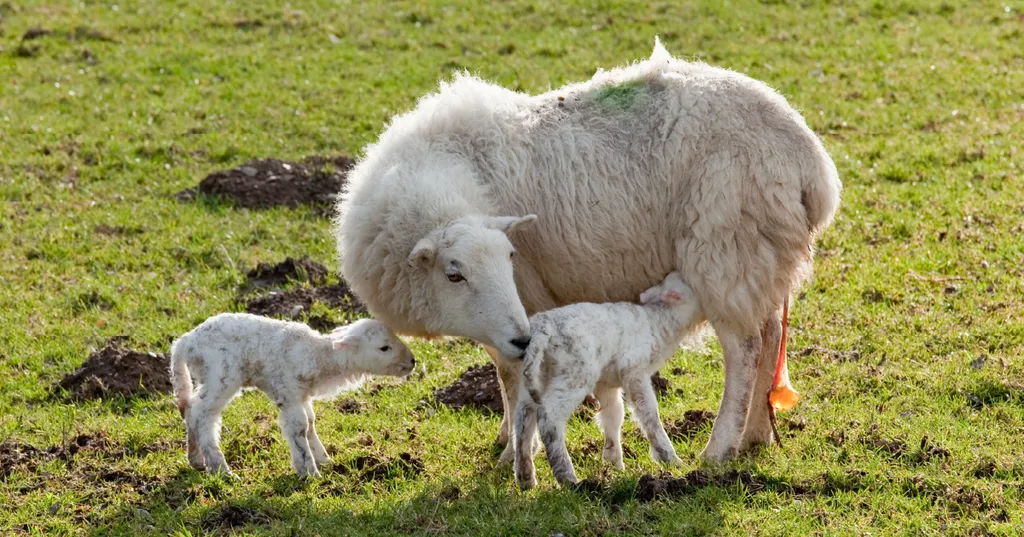
In the rolling hills and sprawling pastures of Hungary, a groundbreaking study is reshaping our understanding of sheep fertility and the critical role that condition plays in their reproductive success. Led by Eszter Ilona Bácsi of the University of Debrecen, this research delves into the intricate relationship between a ewe’s body condition, backfat thickness, and weight, and their ability to conceive and raise twins. The findings, published in *Animal Welfare, Etológia és Tartástechnológia*, offer promising insights for the agricultural sector, with potential implications for livestock management and breeding strategies.
The study, conducted during the summer months, focused on synchronized ewes, measuring their backfat thickness, weight, and condition score. The results revealed significant differences between breeds, with F1 crossbreeds of White Dorper and White Suffolk ewes exhibiting an average backfat thickness of 3.9 mm, notably higher than their White Dorper and Dorper counterparts. These preliminary findings suggest that condition score and backfat thickness could be crucial indicators of a ewe’s fertility and her ability to raise twins.
“Our initial results indicate that condition score is not just a reflection of a ewe’s overall health but also a predictor of her reproductive success,” Bácsi explained. “This is particularly exciting for the agricultural sector, as it opens up new avenues for improving breeding programs and livestock management practices.”
The commercial implications of this research are substantial. By understanding and optimizing the condition of ewes, farmers could enhance fertility rates and increase the number of twins born, ultimately boosting productivity and profitability. Moreover, the study’s findings could lead to more targeted feeding and management strategies, ensuring that ewes are in optimal condition for breeding.
Looking ahead, Bácsi and her team plan to expand the study, involving a larger sample size and additional measurements. “While our preliminary results are promising, we need to conduct further research to fully understand the complex interplay between condition, fertility, and twinning rates,” Bácsi noted. “This will enable us to develop more precise and effective management practices for the agricultural sector.”
As the agricultural industry continues to evolve, research like Bácsi’s is paving the way for more sustainable and productive livestock management practices. By harnessing the power of data and technology, farmers can make informed decisions that benefit both their livestock and their bottom line. With further study, the insights gleaned from this research could revolutionize the way we think about sheep breeding and management, shaping the future of the agricultural sector for years to come.