
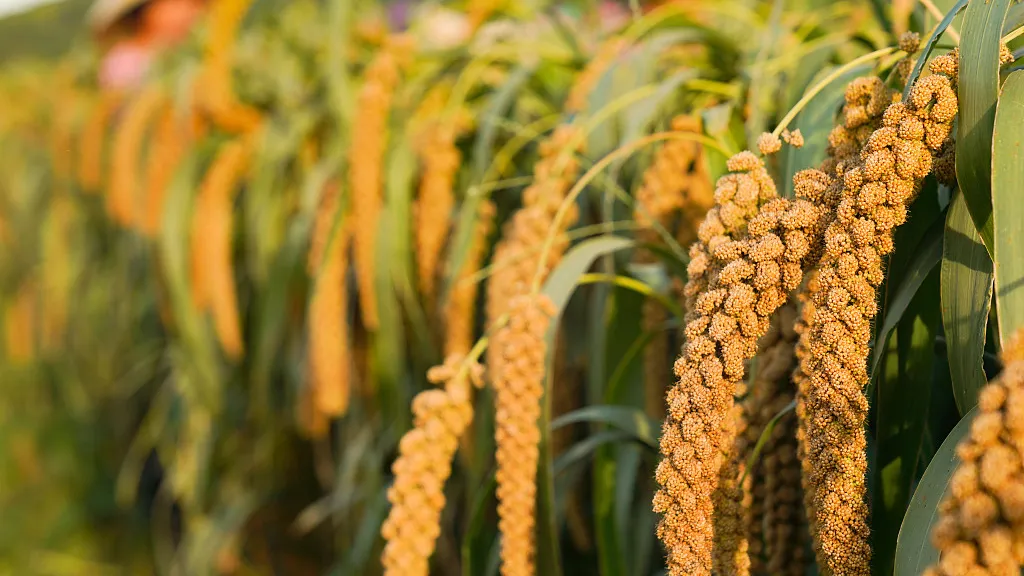
In the ever-evolving world of agritech, a recent study published in *Food Chemistry: X* has shed new light on the flavor formation in puffed foxtail millet, a staple crop in many parts of the world. The research, led by Pengliang Li from the Institute of Biotechnology and Food Science at the Hebei Academy of Agriculture and Forestry Sciences, delves into the chemical intricacies of this popular cereal, offering insights that could revolutionize the way we approach flavor enhancement in cereal products.
Foxtail millet, known for its nutritional benefits and versatility, has long been a subject of interest in the food science community. However, the precise mechanisms behind its flavor development, particularly after puffing, have remained largely unexplored. Li and his team sought to change that, analyzing the volatile profiles of five different cultivars of foxtail millet: Shenmuhongjiugu, Zhangzagu 13, Huangjinmiao, Yugu 18, and Zhonggu 2.
The study employed two distinct model systems to simulate the thermal degradation of individual fatty acids in a defatted matrix and the Maillard reaction between amino acids and glucose. This approach allowed the researchers to establish precursor-product relationships, providing a comprehensive understanding of flavor formation.
“Our findings indicate that puffing significantly increases the levels of aldehydes and heterocyclic compounds, which are crucial for the aroma and taste of puffed millet,” Li explained. “Concurrently, we observed a decrease in their fatty acid and amino acid precursors, suggesting a direct link between these compounds and the volatile profiles of the puffed product.”
The model experiments revealed that linoleic acid and lysine were identified as the most important potential precursors for aliphatic and heterocyclic volatiles. This discovery is particularly noteworthy, as it suggests a common underlying mechanism of pyrolytic cleavage and radical recombination in the formation of aromatic compounds from both fatty acid and amino acid precursors.
The implications of this research for the agriculture sector are substantial. By understanding the precise chemical pathways involved in flavor formation, food manufacturers can develop targeted strategies to enhance the sensory qualities of puffed cereal products. This could lead to increased consumer satisfaction and marketability, ultimately benefiting both producers and consumers.
Moreover, the study’s findings provide a theoretical basis for the precise regulation of flavor quality in puffed cereal products through targeted precursor management. This could open up new avenues for innovation in the food industry, allowing for the development of novel products with tailored flavor profiles.
As the global demand for healthy and nutritious food continues to grow, research like this becomes increasingly vital. By unraveling the complexities of flavor formation in foxtail millet, Li and his team have taken a significant step towards enhancing the quality and appeal of this important cereal crop.
In the words of Li, “This research not only advances our scientific understanding but also paves the way for practical applications that can benefit the entire agritech value chain.” With such promising insights, the future of foxtail millet and other cereal products looks brighter than ever.