
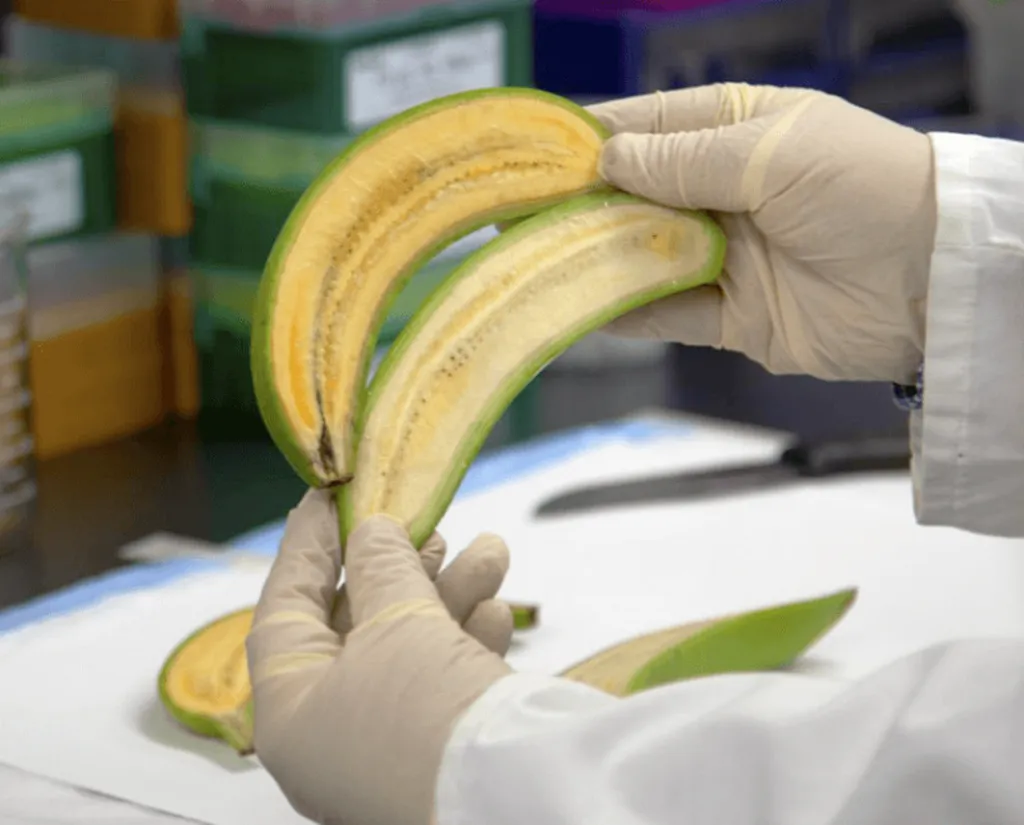
In the heart of Uganda, a groundbreaking study is set to revolutionize the future of banana cultivation, particularly for the East African highland bananas, a staple food for millions. Researchers have successfully employed CRISPR/Cas9 technology to edit the phytoene desaturase (PDS) gene, a critical step that could enhance the genetic improvement of these bananas. The study, led by Frank Kalungi from the National Agricultural Research Laboratories, part of the National Agricultural Research Organisation in Kampala, Uganda, was recently published in *Frontiers in Plant Science*.
The CRISPR/Cas9 system, often hailed as a game-changer in genetic engineering, allows scientists to make precise changes to the DNA of organisms. In this case, the focus was on the PDS gene, which plays a pivotal role in the biosynthesis of carotenoids—pigments that give fruits and vegetables their vibrant colors and also contribute to their nutritional value. By editing this gene, researchers aim to improve the nutritional profile and potentially the commercial value of East African highland bananas.
“Our goal is to enhance the nutritional content and overall quality of bananas, which are a dietary staple for many communities in East Africa,” said Kalungi. “This research is a significant step towards achieving that goal.”
The implications of this research are far-reaching. Bananas are a crucial crop in Uganda and other East African countries, both as a food source and a commercial product. Enhancing their nutritional value could have profound impacts on public health, particularly in regions where malnutrition is a pressing issue. Moreover, improving the quality of bananas could boost their marketability, benefiting farmers and the agricultural sector as a whole.
One of the key areas of focus in this study was the Nakitembe banana, a popular variety in Uganda. By successfully editing the PDS gene in this variety, researchers have demonstrated the potential for similar improvements in other banana cultivars. This could lead to a broader application of CRISPR/Cas9 technology in the genetic improvement of bananas and other crops.
The study also highlights the importance of local research and development in addressing regional agricultural challenges. By conducting this research in Uganda, scientists are better positioned to understand the specific needs and conditions of East African highland bananas, ensuring that the solutions they develop are both effective and sustainable.
Looking ahead, this research could pave the way for further advancements in the field of genome editing. As scientists continue to refine their techniques and explore new applications, the potential for improving crop yields, nutritional content, and disease resistance becomes increasingly promising. This could have significant commercial impacts, from enhancing the competitiveness of local farmers in global markets to fostering innovation in the agricultural sector.
In the words of Kalungi, “This is just the beginning. The possibilities are vast, and we are excited about the potential to make a real difference in the lives of farmers and consumers alike.”
As the world grapples with the challenges of feeding a growing population, research like this offers a glimmer of hope. By harnessing the power of genetic engineering, scientists are not only improving the quality of our food but also contributing to the sustainability and resilience of our agricultural systems. The future of banana cultivation in East Africa looks brighter than ever, thanks to the pioneering work of researchers like Frank Kalungi and his team.