
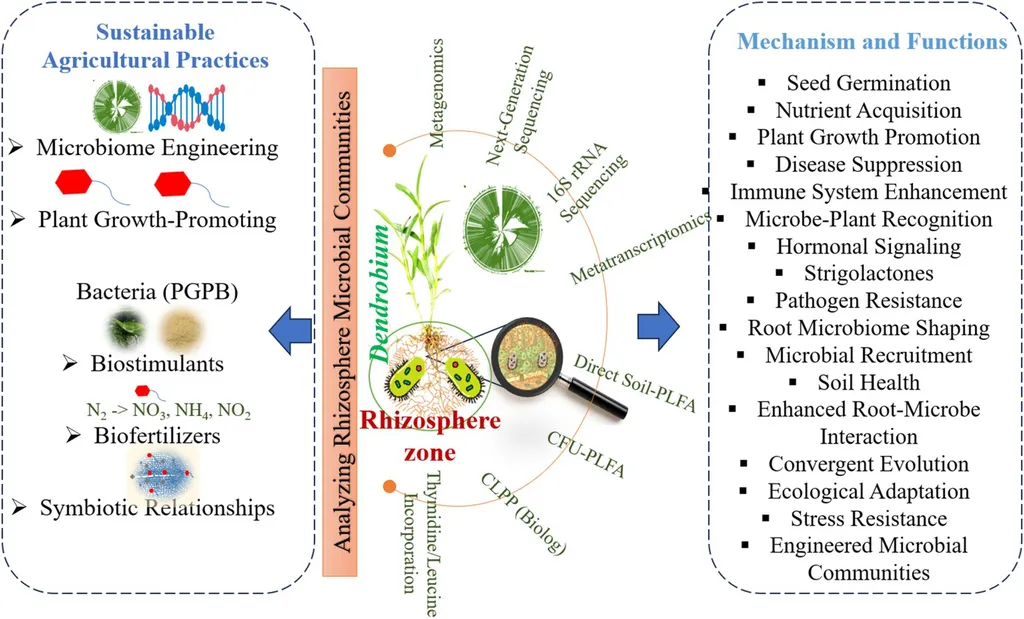
In the lush, intricate world of orchids, a hidden symphony of microbes plays a crucial role in the plants’ survival and growth. A recent review published in *Frontiers in Microbiology* sheds light on the diverse and complex relationships between orchids and their endophytic bacteria, offering promising avenues for sustainable agriculture. Led by Faiza Ramzan from the Department of Agricultural Sciences, Biotechnology and Food Science at the Cyprus University of Technology, the research delves into the ecological roles and biotechnological potential of these microscopic partners.
Orchids, known for their stunning diversity and ecological importance, rely on endophytic bacteria—microbes that live within plant tissues without causing harm—to enhance nutrient uptake, improve stress tolerance, and bolster disease resistance. These plant growth-promoting bacteria (PGPB), including genera like *Pseudomonas*, *Bacillus*, and *Burkholderia*, could revolutionize agriculture by providing eco-friendly alternatives to chemical fertilizers and pesticides. “These bacteria are not just passive inhabitants; they actively contribute to the orchids’ health and resilience,” Ramzan explains. “Understanding their mechanisms can help us develop more sustainable and effective agricultural practices.”
The review highlights the potential of these microbes in biotechnology, particularly in areas like biocontrol, nitrogen fixation, and the production of indole-3-acetic acid (IAA), a key plant hormone that promotes growth. By harnessing the power of these bacteria, farmers could reduce their reliance on synthetic inputs, leading to more sustainable and environmentally friendly farming practices. “The commercial impact could be significant,” Ramzan notes. “From improving crop yields to reducing the environmental footprint of agriculture, these microbes offer a wealth of opportunities.”
One of the most exciting aspects of this research is its potential to shape future developments in agriculture and conservation. The use of metagenomics and next-generation sequencing tools has provided unprecedented insights into the diversity and functions of orchid-associated microbes. However, challenges remain in translating this knowledge into practical applications. “We need multidisciplinary collaboration to fully unlock the potential of these microbes,” Ramzan emphasizes. “By integrating fundamental research with applied strategies, we can develop microbial inoculants that enhance plant growth and resilience.”
The review underscores the need for further research to optimize the use of these microbes in agriculture. As the global demand for sustainable and eco-friendly farming practices grows, the insights from this research could pave the way for innovative solutions that benefit both farmers and the environment. “The future of agriculture lies in understanding and harnessing the power of these microbial partnerships,” Ramzan concludes. “By doing so, we can create a more sustainable and resilient food system for the future.”
Published in *Frontiers in Microbiology* and led by Faiza Ramzan from the Cyprus University of Technology, this research not only advances our understanding of orchid-microbe interactions but also opens new avenues for sustainable agriculture and biotechnological innovation. As we continue to explore the intricate world of plant-microbe relationships, the potential for groundbreaking discoveries and practical applications remains vast and promising.