
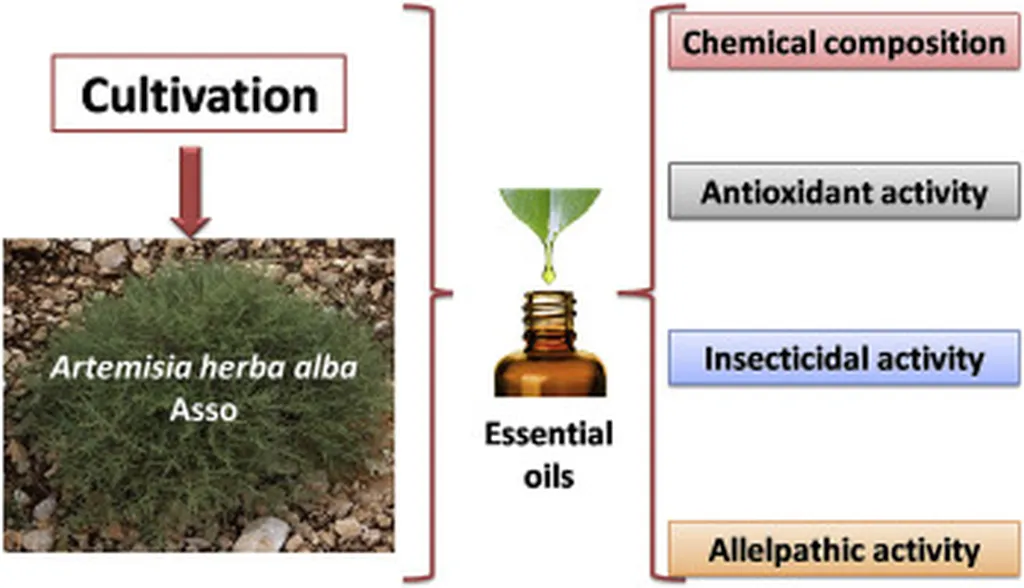
In the vast, arid landscapes of southern Algeria, a humble plant known as Artemisia herba-alba has been quietly revealing its potential to revolutionize the agricultural and pharmaceutical industries. Researchers, led by Dalila Almi from the Laboratory of Analytical Biochemistry and Biotechnology at Mouloud Mammeri University, have uncovered significant antibacterial and antioxidant properties in the plant’s dried leaves, publishing their findings in the *International Journal of Minor Fruits, Medicinal and Aromatic Plants*.
The study focused on evaluating the antibacterial and antioxidant activities of two extracts—aqueous and ethanolic—and essential oil derived from the dried leaves of Artemisia herba-alba. The results were striking. The aqueous extract, in particular, showed a higher yield and greater concentrations of beneficial compounds like phenolics, flavonoids, and tannins compared to the ethanolic extract. “The aqueous extract contains higher amounts of total phenolics, flavonoids, and tannins, which are crucial for its antioxidant and antibacterial properties,” Almi explained.
The antioxidant activity of the extracts and essential oil was measured using two tests: DPPH and FRAP. The aqueous extract demonstrated an IC50 value of 2.02 mg/ml, indicating strong antioxidant potential. The ethanolic extract and essential oil also showed notable antioxidant activities, with IC50 values of 0.753 mg/ml and 1.088 mg/ml, respectively. These findings suggest that Artemisia herba-alba could be a valuable natural source of antioxidants, which are in high demand in the food and pharmaceutical industries for their role in combating oxidative stress and preventing cellular damage.
The antibacterial activity of the extracts was evaluated against four common bacterial strains: Escherichia coli, Enterococcus faecalis, Staphylococcus aureus, and Bacillus cereus. The aqueous extract exhibited significantly higher antibacterial activity compared to the ethanolic extract and essential oil. This suggests that the plant could be a promising candidate for developing natural antibacterial agents, which are increasingly sought after due to growing concerns about antibiotic resistance.
Phytochemical analysis of the aqueous extract revealed the presence of several bioactive compounds, including flavonoids like cathecine and apigenin, and phenolic acids like caffeic acid and ferulic acid. These compounds are known for their health benefits and could be harnessed for various applications in the agriculture and food industries.
The commercial implications of this research are substantial. The agricultural sector could benefit from the development of natural, plant-based antimicrobial agents that can be used to enhance crop protection and food preservation. Additionally, the pharmaceutical industry could explore the use of Artemisia herba-alba extracts in the development of new antioxidant and antibacterial therapies.
As the world increasingly turns to natural and sustainable solutions, the findings from this study highlight the potential of Artemisia herba-alba as a valuable resource. “This research opens up new avenues for the utilization of Artemisia herba-alba in various industries, particularly in agriculture and pharmaceuticals,” Almi noted. The study not only underscores the importance of further research into the plant’s properties but also paves the way for innovative applications that could benefit both the environment and human health.