
In the heart of Iran’s Golestan Province, a groundbreaking study is unearthing the hidden world of fungal endophytes in aerobic rice cultivation, offering promising avenues for enhancing crop resilience and productivity. The research, led by Z. Zare from the Department of Plant Protection at Gorgan University of Agricultural Sciences and Natural Resources, and published in ‘پژوهشهای حفاظت گیاهان ایران’, sheds light on the intricate relationships between fungi and rice plants, with significant implications for the agriculture sector.
The study identified 39 fungal isolates from various parts of aerobically cultivated rice plants, with the highest number of isolates found in the pods and the lowest in the roots. Among the six genera identified, Alternaria and Fusarium were the most prevalent. Notably, three species—Nigrospora sphaerica, E. nigrum, and S. bactrocephalum—were reported as rice plant endophytes in Iran for the first time.
“These endophytic fungi have the potential to increase the plant’s resistance to drought, insects, diseases, and stress conditions,” Zare explained. “Understanding these interactions can help us develop more resilient rice varieties, which is crucial given the increasing risks of dehydration and water scarcity.”
The research employed both morphological and molecular techniques to identify and analyze the fungal isolates. Genomic DNA was extracted, and specific regions were amplified using polymerase chain reaction (PCR). The sequences were then compared with available sequences in the Gene Bank, and phylogenetic trees were constructed to understand the evolutionary relationships among the isolates.
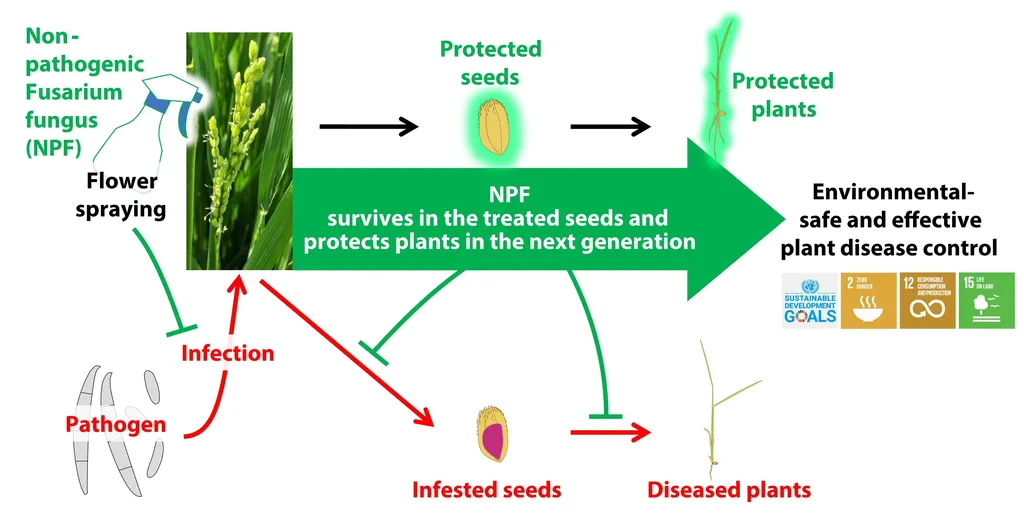
One of the most intriguing findings was the dual nature of some fungal species, such as F. chlamydosporum, which can act as both endophytes and pathogens. “This highlights the complex nature of plant-microbe interactions,” Zare noted. “Environmental conditions and nutritional status can determine whether a fungus acts as a beneficial endophyte or a harmful pathogen.”
The commercial implications of this research are substantial. By identifying and understanding these endophytic fungi, farmers and agronomists can develop strategies to enhance crop resilience, reduce the need for chemical pesticides, and improve overall yield. This is particularly important in the context of aerobic rice cultivation, which is gaining traction as a water-saving alternative to traditional flooded rice farming.
The study also opens new avenues for future research. “Further investigations are needed to fully understand the mechanisms by which these endophytes confer benefits to their host plants,” Zare said. “This could lead to the development of novel biofertilizers and biopesticides, further revolutionizing sustainable agriculture.”
As the world grapples with the challenges of climate change and water scarcity, research like this offers a glimmer of hope. By harnessing the power of beneficial fungi, we can pave the way for a more resilient and sustainable agricultural future. The findings from Golestan Province could very well shape the future of rice cultivation, not just in Iran but globally.