
In a significant stride towards enhancing global avian influenza virus (AIV) surveillance, researchers have compiled a taxonomically harmonized dataset of wild bird hosts, offering a standardized resource for comprehensive risk monitoring. This dataset, published in *Scientific Data*, is poised to revolutionize how the agriculture sector approaches AIV risk assessment and management.
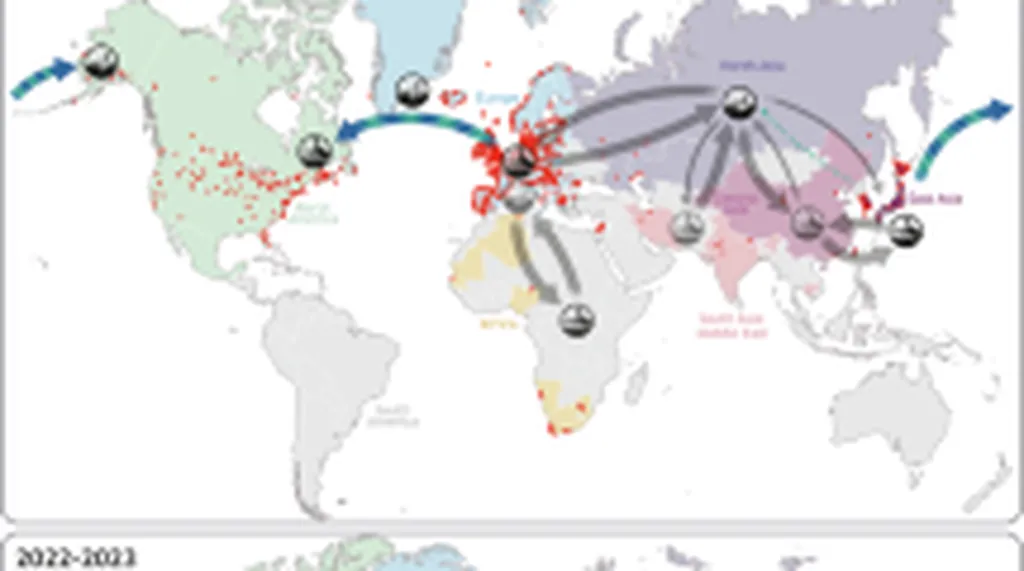
The study, led by Fanshu Du from the National Key Laboratory of Veterinary Public Health and Safety at China Agricultural University, systematically extracted, validated, and harmonized host names from 23,358 viral isolates of wild bird origin reported in the GISAID EpiFluTM database between 1973 and 2023. This meticulous process resolved reporting inconsistencies and unified taxonomy across records, resulting in a dataset comprising 394 wild bird species spanning 26 orders.
“Wild birds are key natural reservoirs and play a central role in the global spread of avian influenza viruses,” Du explained. “The absence of a standardized global list of wild bird hosts has limited comprehensive AIV risk monitoring and assessment within the One Health framework. Our dataset aims to bridge this gap.”
The dataset’s implications for the agriculture sector are profound. By clarifying the global spectrum of wild bird hosts for AIVs, it provides a foundation for host identification, phylogenetic annotation, and ecological trait-based analysis. This structured, machine-readable resource enables reproducible and large-scale, species-level studies spanning virology, epidemiology, and biodiversity.
“Structured in machine-readable formats, it enables reproducible and large-scale, species-level studies spanning virology, epidemiology, and biodiversity,” Du added.
The dataset’s potential to shape future developments in the field is immense. It offers a robust tool for researchers and policymakers to better understand the dynamics of AIV transmission and implement targeted surveillance and control measures. For the agriculture sector, this means improved risk assessment and management strategies, ultimately enhancing biosecurity and safeguarding poultry health and productivity.
As the world continues to grapple with the challenges posed by AIVs, this taxonomically harmonized dataset stands as a beacon of progress, illuminating the path towards more effective and efficient surveillance and control strategies. The research, led by Fanshu Du from the National Key Laboratory of Veterinary Public Health and Safety at China Agricultural University, marks a significant milestone in the ongoing efforts to combat avian influenza and protect global agricultural systems.