
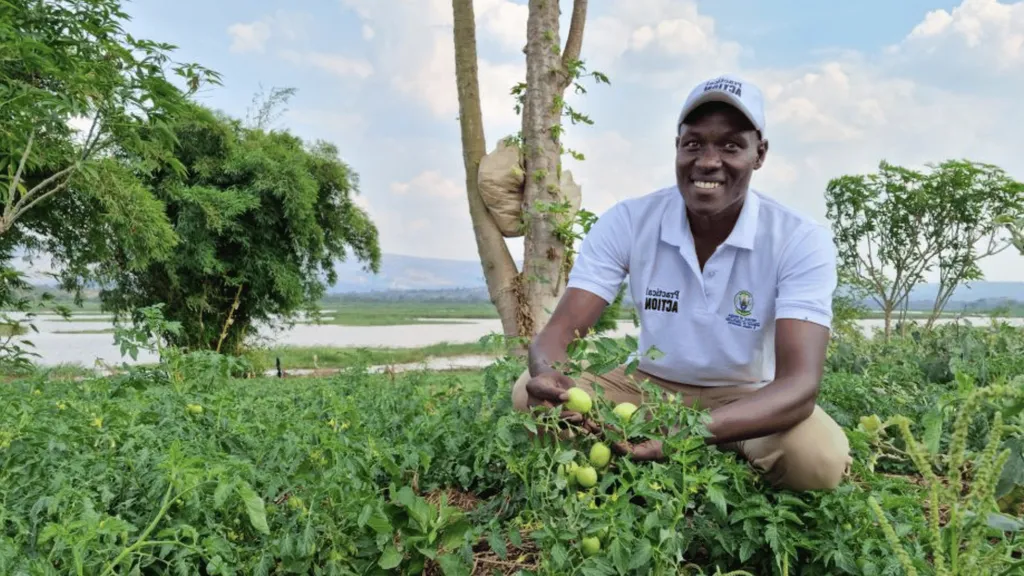
In the heart of Rwanda, a quiet revolution is taking place, one that could reshape the way we think about ecosystem restoration and its impact on agriculture and rural communities. A recent study published in ‘Trees, Forests and People’ argues that it’s time to shift our focus from merely planting trees to regenerating entire people-nature systems. This approach, rooted in social-ecological systems thinking, could unlock new opportunities for sustainable agriculture and rural development.
The research, led by Marina Frietsch from Leuphana University’s Social-Ecological Systems Institute and the Center of Excellence in Biodiversity and Natural Resource Management at the University of Rwanda, challenges the conventional, often fragmented approach to ecosystem restoration. Instead of focusing solely on ecological metrics or social dimensions in isolation, the study advocates for a more integrated approach that considers the complex interplay between people and nature.
“Restoration efforts often focus on simple metrics, like the number of trees planted,” Frietsch explains. “But to truly realize the potential of ecosystem restoration, we need to change our mindsets and move towards regenerating people-nature systems.”
The study introduces the concept of leverage points—critical moments or interventions that can trigger transformational change. By applying this perspective to restoration efforts in western Rwanda, the researchers demonstrate how restoration can serve as a catalyst for reconnecting people and nature, restructuring time scales in natural resource management, and rethinking the use of diverse types of knowledge.
For the agriculture sector, this approach could be a game-changer. By fostering genuine social-ecological relationships, restoration efforts can support mutually reinforcing dynamics that benefit both human and non-human wellbeing. This could translate into improved agricultural productivity, enhanced resilience to climate change, and more sustainable use of natural resources.
The study’s findings have significant implications for future developments in the field. By embracing a relational perspective of ‘people with nature’ rather than an instrumental ‘nature for people’ view, restoration efforts can become more holistic and effective. This shift could pave the way for innovative agricultural practices that are not only productive but also regenerative, supporting both farmers and the environment.
As we grapple with the challenges of climate change, biodiversity loss, and food security, the insights from this research offer a promising path forward. By leveraging the power of ecosystem restoration to regenerate people-nature systems, we can create a future where agriculture and nature thrive together.