
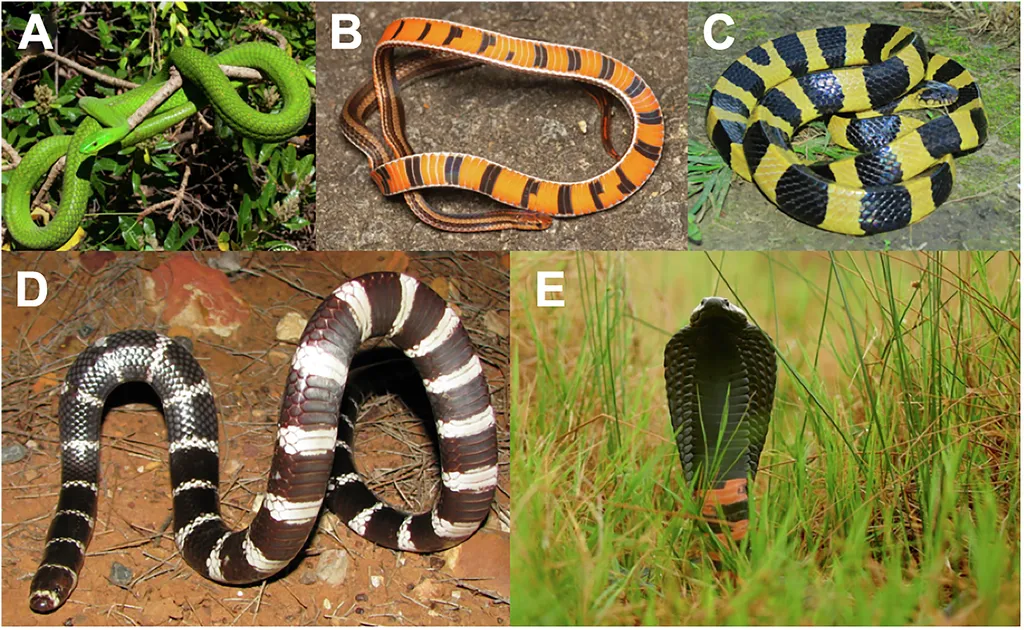
In the intricate dance of survival, predators and prey are locked in an evolutionary arms race, with coloration playing a pivotal role. A recent study published in *Nature Communications* sheds new light on how snakes, particularly those in the Elapidae family, have evolved their anti-predator strategies, offering insights that could have broader implications for the agriculture sector.
The research, led by Karl Loeffer-Henry from the Department of Biology at Carleton University in Ottawa, explores the fascinating world of snake coloration and defensive behaviors. The study reveals that hidden color signals—conspicuous patches on concealed body parts—may serve as a crucial intermediate stage in the evolution of warning coloration, or aposematism, in snakes.
“Our findings suggest that aposematism can evolve through multiple routes,” Loeffer-Henry explains. “Hidden coloration is often a precursory state, but direct transitions from camouflage to aposematism also occur. This complexity highlights the dynamic nature of evolutionary processes.”
The study’s phylogenetic comparative analysis identified several key patterns in the anti-predator color evolution of Elapidae snakes. Notably, a few major transitions influenced the overall distribution of hidden colors, camouflage, and aposematism within the group. The research also quantified associations between color patterns and defensive behaviors that reveal ventral surfaces, finding that venter-revealing defensive behaviors frequently co-occur with hidden color signals.
For the agriculture sector, these findings could have significant implications. Understanding the evolutionary strategies of snakes and other predators can inform the development of more effective pest control methods. For instance, farmers could leverage insights into coloration and defensive behaviors to design better traps or deterrents that mimic the natural signals used by prey species.
Moreover, the study’s emphasis on the co-evolution of coloration and behavior underscores the importance of a holistic approach to pest management. By considering both the visual and behavioral cues that predators use, farmers can create more targeted and sustainable solutions.
As Loeffer-Henry notes, “Our results highlight the prevalence of co-evolution between venter-revealing defensive behavior and anti-predator coloration in snakes. This co-evolutionary dynamic is a rich area for further research, with potential applications in various fields, including agriculture.”
The study’s findings also open up new avenues for research in the field of evolutionary biology. By uncovering the multiple pathways through which aposematism can evolve, the research challenges traditional models and encourages a more nuanced understanding of the evolutionary process.
In the broader context, this research could inspire innovative approaches to pest control and predator management in agriculture. By harnessing the power of evolutionary insights, farmers and researchers can work together to develop more effective and sustainable solutions for protecting crops and livestock.
As the agricultural sector continues to face the challenges of climate change and increasing pest pressures, the insights from this study offer a promising avenue for exploration. By understanding the intricate dance of survival between predators and prey, we can better equip ourselves to navigate the complexities of the natural world and develop strategies that promote agricultural resilience and sustainability.