
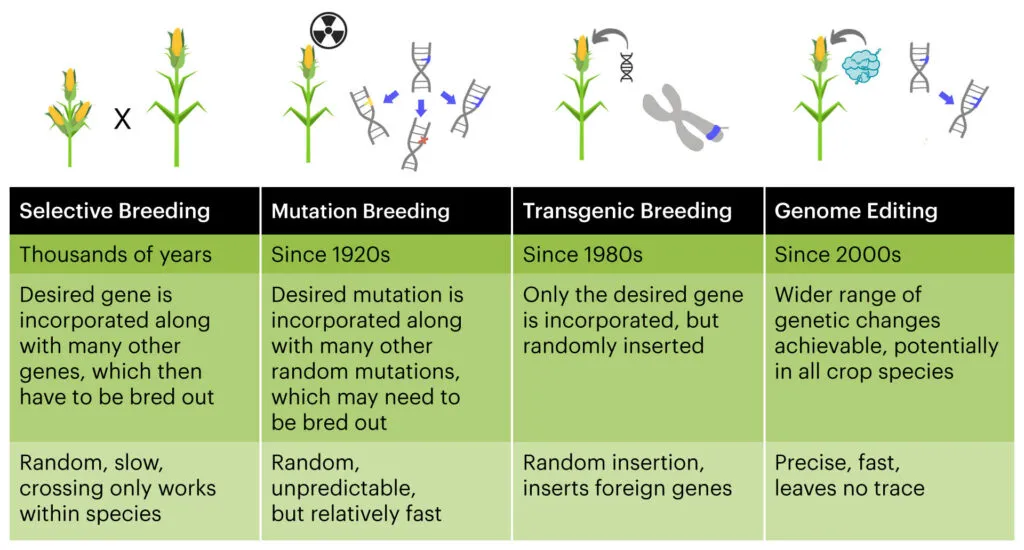
In the intricate world of plant biology, a tiny mutation has been found to hold significant promise for understanding and potentially enhancing plant growth. Researchers, led by Huanhuan Yang from the Department of Agri-microbiomics and Biotechnology at the Chinese Academy of Sciences, have uncovered a mutation in the β-Tubulin 2 (TUB2) gene that could revolutionize our approach to plant cell elongation and cell wall integrity. Their findings, published in *EMBO Reports*, open new avenues for agricultural innovation.
The study focuses on the FRA1/KINESIN-4A gene, which encodes a microtubule-based kinesin motor essential for plant cell morphogenesis. Mutations in this gene typically result in dwarfed growth phenotypes due to reduced cell wall mechanics. However, the team identified a suppressor mutation, E69K, in the TUB2 gene that surprisingly restores normal growth in plants with the fra1 mutation.
“This mutation is a game-changer,” says Yang. “It not only suppresses the dwarf phenotype but also provides insights into how microtubules control plant cell elongation.”
The E69K mutation affects microtubule stability but intriguingly does not rescue the cell wall defects or lateral displacement of microtubules in fra1 mutants. Through transcriptomic analysis, the researchers propose that the mutation restores cell elongation by blocking the cell wall integrity (CWI) signaling pathway. This discovery could have profound implications for agriculture, where plant growth and yield are paramount.
“Understanding how this mutation interacts with the cell wall integrity signaling pathway could lead to the development of crops with enhanced growth and resilience,” explains Yang. “This has the potential to address some of the pressing challenges in agriculture, such as food security and sustainable farming practices.”
The findings suggest that manipulating microtubule dynamics could be a key strategy for improving plant morphology and productivity. By targeting specific genes like TUB2, scientists might be able to engineer plants that are more robust and efficient in resource utilization.
“This research is just the beginning,” adds Yang. “It opens up a whole new area of exploration in plant biology and agritech. The potential applications are vast, and we are excited to see how this knowledge can be translated into real-world solutions.”
As the global population continues to grow, the demand for food and agricultural products is increasing. Innovations in plant biology, such as those highlighted in this study, are crucial for meeting these demands sustainably. The discovery of the E69K mutation in TUB2 not only advances our fundamental understanding of plant growth but also paves the way for groundbreaking developments in the agriculture sector.
In an era where precision agriculture and biotechnology are at the forefront, this research underscores the importance of investing in scientific exploration. The insights gained from this study could shape the future of agriculture, ensuring that we can feed the world’s growing population while preserving our planet’s resources.