
In the heart of Uttarakhand, India, a groundbreaking study is transforming the way we think about groundwater remediation. Researchers have developed a novel approach to tackle iron contamination in drinking water, leveraging the power of biochar and bacteria. This innovative method not only promises cleaner water but also holds significant potential for the agriculture sector.
Iron contamination in groundwater is a creeping issue, often driven by industrial, urban, and agricultural activities. It can lead to undesirable tastes, colors, and odors in drinking water, making it unpalatable and potentially harmful. Traditional remediation methods can be costly and environmentally damaging. However, a recent study published in *BMC Microbiology* offers a promising alternative.
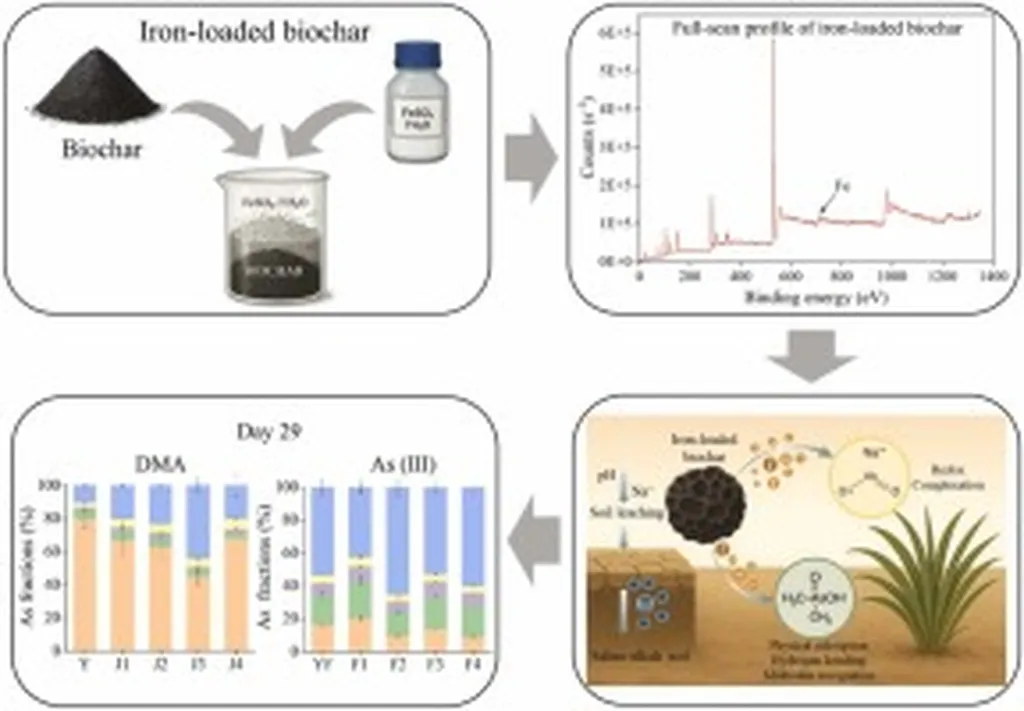
The research, led by Mayank Bahuguna from the School of Biosciences at Swami Rama Himalayan University, focuses on the adsorption behavior of Fe(II) ions using a bacterial-biochar immobilized adsorbent. The team utilized rice husk biochar, a readily available agricultural byproduct, and immobilized it with Bacillus subtilis, a bacterium isolated from iron-rich soil samples near handpumps in Haridwar, Uttarakhand.
“The idea was to enhance the adsorption capacity of biochar by immobilizing it with bacteria,” explains Bahuguna. “We found that this composite material significantly outperformed pristine biochar in removing Fe(II) ions from water.”
The study revealed that the bacterial-biochar immobilized adsorbent achieved a remarkable 79.3% Fe(II) removal. This enhanced performance is attributed to the increased surface area and the presence of specific functional groups that facilitate adsorption. The researchers also discovered that the adsorbent performed optimally at lower Fe(II) concentrations, making it particularly suitable for treating mildly contaminated water sources.
The implications for the agriculture sector are substantial. Rice husks, a common agricultural waste product, can be repurposed to create this high-performance adsorbent. This not only provides a sustainable solution for water remediation but also adds value to an otherwise underutilized resource.
“By converting agricultural waste into a valuable adsorbent, we can address two pressing issues: water contamination and waste management,” says Bahuguna. “This dual benefit makes our approach particularly attractive for agricultural communities.”
The study also sheds light on the future of bioremediation technologies. The use of bacterial-biochar composites opens up new avenues for developing cost-effective and environmentally friendly solutions for water treatment. As Bahuguna notes, “Our findings highlight the potential of green biotechnology in addressing water quality issues. This is just the beginning, and we are excited about the possibilities.”
The research team’s work is a testament to the power of interdisciplinary collaboration, combining microbiology, materials science, and environmental engineering to create a sustainable solution. As we face increasing water quality challenges, innovative approaches like this one will be crucial in ensuring access to clean and safe drinking water for all.
In the quest for cleaner water, this study marks a significant step forward, offering a glimpse into a future where agricultural waste is transformed into a powerful tool for environmental remediation.