
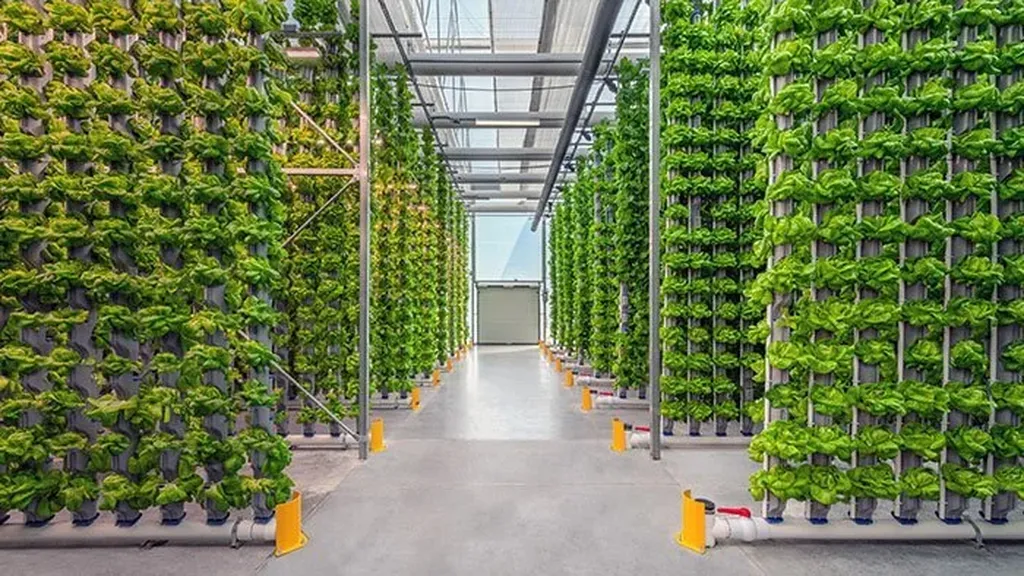
In the rapidly evolving world of sustainable agriculture, vertical farming has been hailed as a revolutionary approach to growing crops in urban environments. However, recent bankruptcies of several high-profile vertical farming companies have cast a shadow over the industry’s future. A new perspective published in *EMBO Reports* delves into the scientific and economic challenges that vertical farming must overcome to ensure its long-term viability.
Vertical farming, which involves growing crops in stacked layers, often in controlled indoor environments, has long been touted as a solution to the challenges of traditional agriculture. Proponents argue that it uses less water, requires no pesticides, and can produce higher yields per square foot. Yet, despite these advantages, the industry has faced significant hurdles, including high operational costs, energy consumption, and the need for sophisticated technology.
Jeremy Harbinson, lead author of the *EMBO Reports* perspective and a researcher at the Laboratory of Biophysics at Wageningen University, highlights the need for a more nuanced understanding of the challenges. “While vertical farming has tremendous potential, it’s not a one-size-fits-all solution,” Harbinson says. “We need to address the scientific and economic obstacles to make it a sustainable and scalable option for the future.”
One of the primary challenges is the high energy consumption required to power the LED lights and climate control systems necessary for indoor farming. This not only drives up costs but also raises environmental concerns, as the energy often comes from non-renewable sources. Harbinson suggests that advancements in renewable energy and more efficient lighting technologies could help mitigate these issues.
Another significant hurdle is the economic viability of vertical farming operations. High initial investment costs and ongoing expenses for technology and labor have made it difficult for many companies to turn a profit. Harbinson emphasizes the need for innovative business models and government support to make vertical farming more accessible and affordable.
The perspective also touches on the scientific challenges, such as optimizing plant growth in controlled environments and developing new crop varieties that are better suited for vertical farming. Harbinson notes that interdisciplinary research, combining plant biology, engineering, and data science, will be crucial in overcoming these obstacles.
The commercial impacts of these challenges are already being felt across the agriculture sector. Investors, once eager to pour money into vertical farming startups, are now more cautious, seeking clearer paths to profitability. Farmers, too, are weighing the benefits and drawbacks of adopting vertical farming technologies.
Looking ahead, Harbinson’s perspective offers a roadmap for the future of vertical farming. By addressing the scientific and economic challenges head-on, the industry can pave the way for a more sustainable and efficient approach to agriculture. As Harbinson puts it, “The future of vertical farming lies in our ability to innovate and adapt. With the right support and research, it can become a cornerstone of sustainable agriculture.”
Published in *EMBO Reports*, the perspective by Harbinson and colleagues serves as a timely reminder of the complexities and opportunities in vertical farming. As the agriculture sector continues to evolve, the insights from this research could shape the development of new technologies and business models, ultimately contributing to a more sustainable food system.