
In the heart of China’s agricultural research, a groundbreaking study is reshaping our understanding of an emerging environmental threat: silver pollution. As industrialization and nanotechnology advance, silver (Ag) is increasingly contaminating our soils and waters, posing risks to ecosystems and human health. But a new study, published in *Plant Nano Biology*, offers a promising solution that could revolutionize agricultural practices and environmental management.
Silver, in the form of ions (Ag+) and nanoparticles (AgNPs), is highly mobile and toxic. It disrupts soil microbial communities, impairs crop productivity, and can enter our food chains. “The environmental behavior of silver is complex,” explains Liaqat Ali, lead author of the study and a researcher at the College of Resources and Environment, Xinjiang Agricultural University, and the Department of Soil and Water Sciences, China Agricultural University. “It interacts with organic matter, is influenced by pH and mineral composition, and undergoes complexation and redox transformations. This makes its remediation a significant challenge.”
Traditional remediation methods, such as precipitation, filtration, and phytoremediation, have proven limited. They are often high-cost, low-selectivity, time-consuming, and can even risk secondary pollution. However, Ali and his team have identified a game-changer: biochar-based nanocomposites (BNCs).
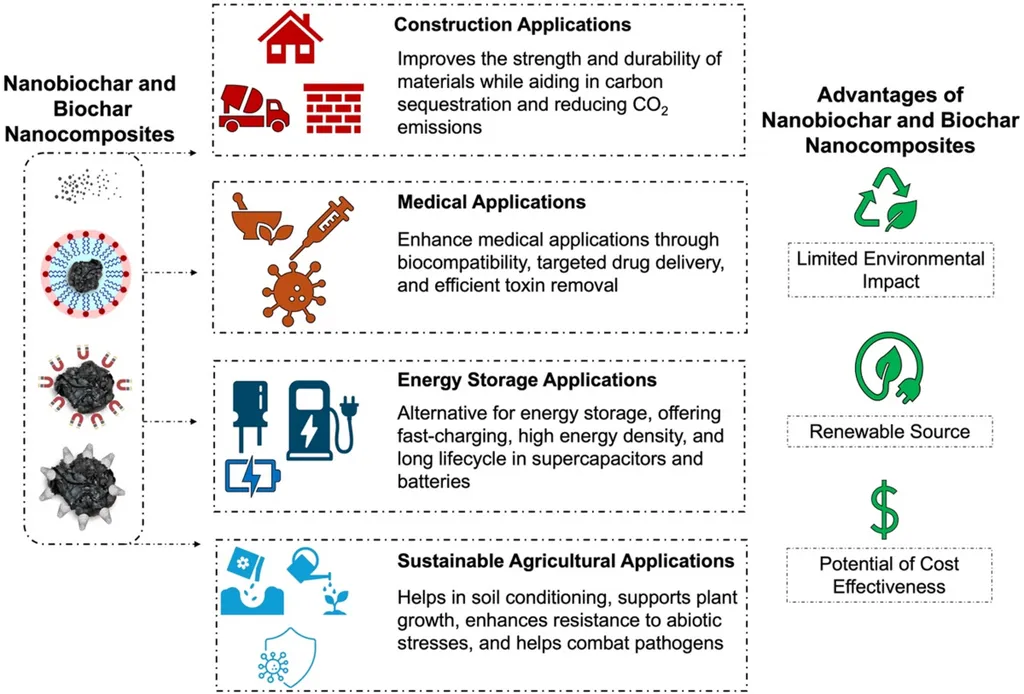
Biochar, a carbon-rich product derived from the thermal decomposition of organic material, offers a high surface area and excellent adsorption capacity. When integrated with nanoparticles (NPs), it forms BNCs that can efficiently immobilize Ag+ and reduce its toxicity. Moreover, BNCs can improve soil fertility and enhance plant resilience, directly benefiting the agriculture sector.
“The integration of biochar with nanoparticles enables us to address silver pollution while simultaneously improving soil health and crop productivity,” Ali states. This dual benefit is a significant step forward in sustainable agriculture and environmental management.
The study synthesizes recent insights into silver toxicity, transformation, and bioaccumulation across soil–plant–water–human systems. It critically assesses the efficacy, limitations, and implementation challenges of BNCs and proposes integrative strategies that couple advanced materials with ecological restoration principles.
The implications for the agriculture sector are substantial. By adopting BNCs, farmers can remediate silver pollution while enhancing soil fertility and crop resilience. This could lead to increased yields, improved food safety, and a more sustainable agricultural industry.
Looking ahead, the study highlights future research needs, such as field-scale validation, standardized toxicity protocols, co-benefit analysis, and green synthesis. These steps are crucial for translating laboratory findings into practical, large-scale solutions.
As we grapple with the environmental challenges of the 21st century, this research offers a beacon of hope. By harnessing the power of biochar-based nanocomposites, we can protect our ecosystems, safeguard human health, and pave the way for a more sustainable future. The study, led by Liaqat Ali and published in *Plant Nano Biology*, is a testament to the innovative spirit of agricultural research and its potential to transform our world.