
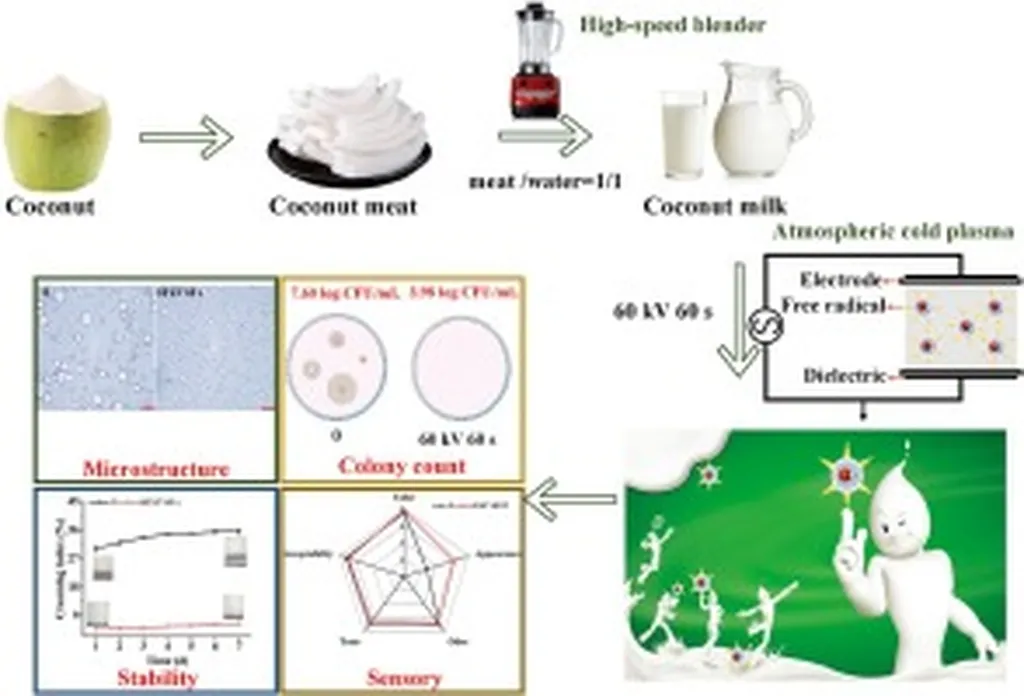
In the quest for sustainable and environmentally friendly food alternatives, plant-based milk analogues have emerged as a popular substitute for traditional dairy products. However, ensuring the microbiological stability, quality, and functional properties of these plant-based alternatives remains a significant challenge. A recent study published in *Food Chemistry: X* sheds light on a promising technology that could revolutionize the production of plant-based milk analogues: atmospheric cold plasma.
Atmospheric cold plasma technology has been gaining traction in the food industry due to its ability to enhance the quality and safety of food products. The study, led by Entesar Hanan from the Department of Food Technology at Jamia Hamdard in New Delhi, India, explores the impact of this technology on plant-based milk analogues and their proteins. The research highlights how cold plasma can improve the solubility, emulsifying properties, hydrophilicity, and foaming characteristics of these plant-based products.
The study delves into the various parameters that influence the efficacy of cold plasma, such as frequency, voltage, electrode spacing, treatment time, and gas composition. These factors play a crucial role in regulating the type and concentration of reactive plasma species, which are essential for microbial disinfection and enzyme inactivation. “The results indicate that cold plasma enhances the functional properties of plant-based analogues and proteins,” Hanan explains. “This technology has the potential to significantly improve the quality and stability of plant-based milk analogues, making them more appealing to consumers.”
The commercial implications of this research are substantial for the agriculture sector. As the demand for plant-based products continues to rise, farmers and food manufacturers are seeking innovative solutions to meet this growing market. Cold plasma technology offers a sustainable and efficient method for enhancing the functional properties of plant-based milk analogues, thereby increasing their marketability and consumer acceptance.
Moreover, the study highlights the potential applications of cold plasma in the food industry, paving the way for further research and development in this field. “This work presents current insights into cold plasma for plant-based milk analogues and highlights their prospective applications,” Hanan notes. “The recent research and developments in this field are promising, and we anticipate significant advancements in the near future.”
As the food industry continues to evolve, the integration of advanced technologies like cold plasma could play a pivotal role in shaping the future of plant-based products. This research not only underscores the importance of innovation in the agriculture sector but also offers a glimpse into the potential of cold plasma technology to transform the way we produce and consume food. With ongoing advancements and further exploration, cold plasma could become a cornerstone of sustainable and high-quality food production.